


Hey there! As a supplier of CNC Swiss lathes, I often get asked about the feed rate range of these amazing machines. So, I thought I'd write this blog to break it down for you in a simple and easy - to - understand way.
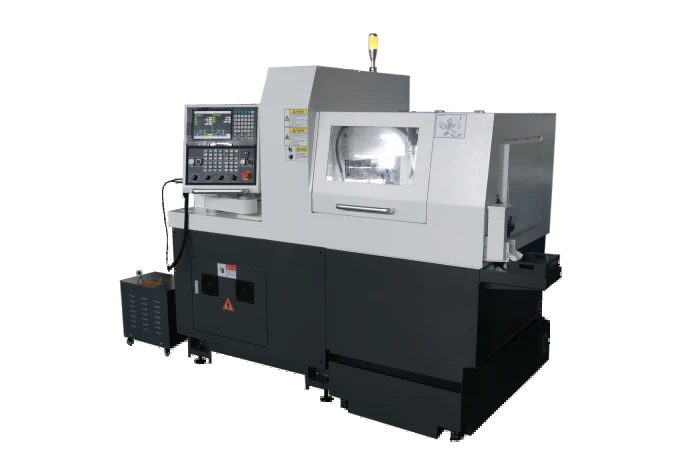
First off, let's talk a bit about what a CNC Swiss lathe is. A CNC Swiss lathe, also known as a Swiss Type Lathe Machine (you can learn more about it here), is a highly precise and efficient machining tool. It's especially great for making small, complex parts with high accuracy. These lathes are used in a wide range of industries, from medical device manufacturing to electronics and aerospace.
Now, onto the feed rate. The feed rate in a CNC Swiss lathe refers to how fast the cutting tool moves along the workpiece. It's a crucial parameter because it directly affects the quality of the finished part, the machining time, and the tool life.
The feed rate range of a CNC Swiss lathe can vary quite a bit depending on several factors. One of the main factors is the type of material you're machining. For example, if you're working with a soft material like aluminum, you can usually use a higher feed rate compared to a harder material like stainless steel or titanium.
Let's start with the lower end of the feed rate range. In general, for very delicate operations or when working with extremely hard materials, the feed rate can be as low as 0.001 inches per revolution (ipr). This slow feed rate allows for very precise cuts and minimizes the risk of tool breakage. For instance, when machining small medical components that require high precision, a low feed rate like this might be necessary to ensure the part meets the strict quality standards.
On the other hand, the upper end of the feed rate range can go up to around 0.05 inches per revolution or even higher in some cases. This higher feed rate is typically used when machining softer materials and when you want to increase the productivity of the machining process. For example, if you're making simple aluminum parts in large quantities, using a higher feed rate can significantly reduce the machining time and increase your overall output.
Another factor that affects the feed rate range is the type of cutting tool being used. Different cutting tools have different capabilities and limitations when it comes to feed rates. For example, carbide cutting tools are generally more durable and can handle higher feed rates compared to high - speed steel tools. So, if you're using a carbide tool, you might be able to push the feed rate towards the upper end of the range.
The diameter of the workpiece also plays a role. Smaller diameter workpieces can often tolerate higher feed rates because there's less material to remove per revolution. In contrast, larger diameter workpieces might require a lower feed rate to avoid excessive cutting forces and tool wear.
CNC Swiss lathes also offer the flexibility to adjust the feed rate during the machining process. This is known as variable feed rate. With variable feed rate, you can start with a lower feed rate for roughing operations to remove the bulk of the material and then increase the feed rate for finishing operations to achieve a smooth surface finish.
When it comes to CNC Swiss Lathe Machining (you can find more details here), understanding the right feed rate is essential for getting the best results. If the feed rate is too low, it can lead to longer machining times and increased production costs. On the other hand, if the feed rate is too high, it can cause poor surface finish, tool breakage, and even damage to the workpiece.
CNC Swiss Turning (check it out here) also relies heavily on the proper feed rate. During turning operations, the feed rate determines how quickly the tool moves along the length of the workpiece. A well - chosen feed rate can help you achieve accurate dimensions and a good surface finish on the turned part.
As a supplier, I've seen firsthand how the right feed rate can make a huge difference in the machining process. That's why I always recommend working closely with your machining team to determine the optimal feed rate for your specific application. You can also consult the machine's manual and the cutting tool manufacturer's recommendations.
In conclusion, the feed rate range of a CNC Swiss lathe can vary from as low as 0.001 inches per revolution to around 0.05 inches per revolution or more, depending on factors like the material, cutting tool, and workpiece diameter. By understanding these factors and choosing the right feed rate, you can improve the quality of your parts, increase productivity, and extend the life of your cutting tools.
If you're in the market for a CNC Swiss lathe or have any questions about feed rates or other aspects of CNC Swiss machining, don't hesitate to reach out. We're here to help you make the most of your machining operations and find the perfect solution for your business.
References:

- General knowledge of CNC Swiss lathe technology and machining principles.
- Experience from working as a CNC Swiss lathe supplier.


