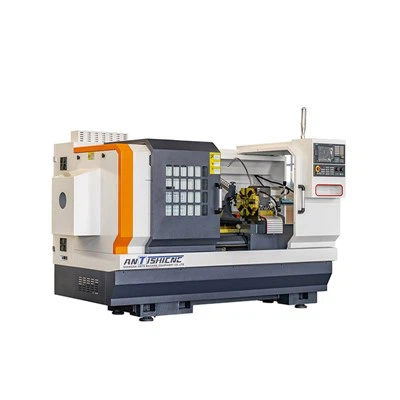
In the dynamic landscape of manufacturing and construction, ironworking stands as a cornerstone industry that has witnessed remarkable technological advancements over the years. As an ironworker supplier, I have had the privilege of witnessing firsthand how these innovations have transformed the way we work with iron and steel. In this blog post, I will explore some of the most significant technological advancements in ironworking and how they have revolutionized the industry.
Automation and Robotics
One of the most significant technological advancements in ironworking is the integration of automation and robotics. Automation has allowed for greater precision, efficiency, and productivity in ironworking processes. Robotic systems can perform repetitive tasks with high accuracy, reducing the risk of human error and increasing the overall quality of the finished product.
For example, robotic welding systems can weld iron and steel components with consistent quality and speed. These systems can be programmed to perform complex welding patterns, ensuring that each weld is of the highest quality. Additionally, robotic material handling systems can move heavy iron and steel components with ease, reducing the physical strain on workers and increasing the efficiency of the production process.
Computer-Aided Design (CAD) and Computer-Aided Manufacturing (CAM)
Another major advancement in ironworking is the use of computer-aided design (CAD) and computer-aided manufacturing (CAM) technologies. CAD software allows engineers and designers to create detailed 3D models of iron and steel components, which can be used to simulate the manufacturing process and identify potential issues before production begins.
CAM software, on the other hand, uses the CAD models to generate instructions for the manufacturing equipment, such as CNC machines. This allows for precise control over the manufacturing process, resulting in higher quality products and reduced waste.
Advanced Cutting Technologies
Cutting is a critical process in ironworking, and advancements in cutting technologies have significantly improved the efficiency and precision of this process. Traditional cutting methods, such as sawing and shearing, have been replaced by more advanced technologies, such as laser cutting and plasma cutting.
Laser cutting uses a high-powered laser beam to cut through iron and steel with extreme precision. This technology is capable of cutting complex shapes and patterns with minimal heat-affected zones, resulting in high-quality cuts with smooth edges. Plasma cutting, on the other hand, uses a high-velocity jet of ionized gas to cut through metal. This technology is faster and more efficient than traditional cutting methods, making it ideal for large-scale production.
Hydraulic Systems
Hydraulic systems have also played a significant role in the advancement of ironworking. Hydraulic presses and punches are commonly used in ironworking to shape and form iron and steel components. These systems use hydraulic fluid to generate high pressure, which is used to apply force to the workpiece.
One of the latest advancements in hydraulic systems is the development of Hydraulic Punching and Shearing Machine. These machines combine the functions of punching and shearing into a single unit, allowing for greater efficiency and productivity. They are capable of punching holes and shearing metal sheets with high precision, making them ideal for a wide range of applications.
Material Science
Advancements in material science have also had a significant impact on ironworking. New materials, such as high-strength steels and alloys, have been developed that offer improved strength, durability, and corrosion resistance. These materials are used in a variety of applications, from construction to automotive manufacturing.
In addition to new materials, advancements in heat treatment processes have also improved the properties of iron and steel. Heat treatment can be used to increase the strength, hardness, and toughness of the material, making it more suitable for specific applications.


Energy Efficiency
In recent years, there has been a growing focus on energy efficiency in ironworking. Manufacturers are increasingly looking for ways to reduce their energy consumption and carbon footprint. This has led to the development of new technologies and processes that are more energy-efficient.
For example, some ironworking equipment is now designed to use less energy while still maintaining high levels of productivity. Additionally, the use of renewable energy sources, such as solar and wind power, is becoming more common in the industry.
The Future of Ironworking
As technology continues to evolve, the future of ironworking looks promising. We can expect to see further advancements in automation, robotics, and material science, which will lead to even greater efficiency, productivity, and quality in the industry.
One area that is likely to see significant growth is the use of artificial intelligence (AI) and machine learning in ironworking. These technologies can be used to optimize production processes, predict maintenance needs, and improve quality control.
Another area of interest is the development of new materials and manufacturing processes that are more sustainable and environmentally friendly. This will not only help to reduce the industry's impact on the environment but also meet the growing demand for sustainable products.
Conclusion
In conclusion, the ironworking industry has come a long way in recent years, thanks to the rapid pace of technological advancements. From automation and robotics to advanced cutting technologies and material science, these innovations have transformed the way we work with iron and steel.
As an ironworker supplier, I am excited to be a part of this industry and to see how these technologies will continue to shape the future of ironworking. If you are interested in learning more about our products and services, or if you have any questions about the latest technological advancements in ironworking, please feel free to contact us to discuss your specific needs and requirements. We look forward to working with you to find the best solutions for your ironworking projects.
References
- "Automation in Manufacturing: A Review." Journal of Manufacturing Technology Management, vol. 25, no. 3, 2014, pp. 343-367.
- "Computer-Aided Design and Manufacturing: Principles and Applications." Prentice Hall, 2009.
- "Advanced Cutting Technologies for Metalworking." ASM International, 2012.
- "Hydraulic Systems in Manufacturing: Design, Operation, and Maintenance." McGraw-Hill, 2010.
- "Material Science and Engineering: An Introduction." John Wiley & Sons, 2016.