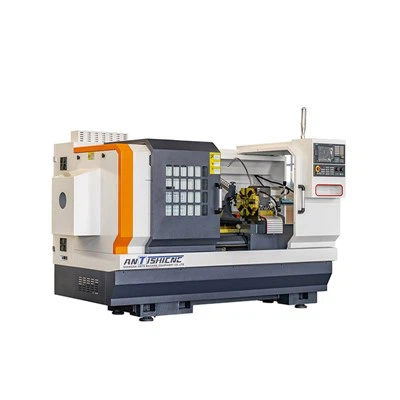
As a supplier of 100 Ton Ironworkers, I'm often asked about the actual size of these powerful machines. Understanding the dimensions of a 100 Ton Ironworker is crucial for potential buyers, as it directly impacts the space requirements for installation and operation. In this blog post, I'll delve into the physical size of a 100 Ton Ironworker and compare it with other models in our product line.
Physical Dimensions of a 100 Ton Ironworker
A 100 Ton Ironworker is a substantial piece of equipment designed to handle heavy - duty metalworking tasks. The overall length of a typical 100 Ton Ironworker usually ranges from 8 to 10 feet. This length is determined by the design of the machine, which includes the worktable, the hydraulic system, and the various tooling stations. The width of the machine is generally around 4 to 6 feet. This width provides enough space for the operator to access different functions and also ensures the stability of the machine during operation.
The height of a 100 Ton Ironworker can vary, but it is typically in the range of 6 to 8 feet. This height is important for the operator to have easy access to the controls and the work area. The machine's height also affects its center of gravity, which is crucial for maintaining stability during high - force operations.
Comparison with Smaller Models
To better understand the size of a 100 Ton Ironworker, it's helpful to compare it with smaller models such as the 50 Ton Ironworker and the 65 Ton Ironworker.
The 50 Ton Ironworker is a more compact machine. Its length is usually around 6 to 8 feet, width around 3 to 5 feet, and height around 5 to 7 feet. This smaller size makes it suitable for workshops with limited space or for tasks that don't require as much force.


The 65 Ton Ironworker falls in between the 50 Ton and 100 Ton models. It has a length of about 7 to 9 feet, width of 3.5 to 5.5 feet, and height of 5.5 to 7.5 feet. While it offers more power than the 50 Ton model, it is still more compact than the 100 Ton Ironworker.
Space Requirements for Installation
When planning to install a 100 Ton Ironworker, it's essential to consider not only the machine's physical dimensions but also the additional space required for operation. The operator needs enough room to move around the machine, load and unload materials, and access the controls. A general rule of thumb is to allow at least an additional 3 to 5 feet of clearance around the machine.
In addition to the floor space, the ceiling height is also an important factor. The hydraulic cylinders and other components of the 100 Ton Ironworker may require a certain amount of vertical space for proper operation. A ceiling height of at least 8 to 10 feet is recommended to ensure that the machine can function without any restrictions.
Impact of Size on Performance
The size of a 100 Ton Ironworker is closely related to its performance. The larger size allows for a more robust hydraulic system, which can generate the high force required for cutting, punching, and bending thick metal sheets and bars. The larger worktable provides more space for handling larger workpieces, increasing the versatility of the machine.
However, the larger size also means that the machine is heavier and more difficult to move. It requires a solid and level foundation to ensure stability during operation. The installation process may also be more complex and time - consuming compared to smaller models.
Considerations for Different Workshops
For large industrial workshops, the size of a 100 Ton Ironworker may not be a significant issue. These workshops usually have ample space and the necessary infrastructure to support the installation and operation of large - scale machinery. The high - performance capabilities of the 100 Ton Ironworker can greatly enhance the productivity of the workshop.
On the other hand, for small - to - medium - sized workshops, the size of the machine needs to be carefully considered. If space is limited, a smaller model such as the 50 Ton or 65 Ton Ironworker may be a more suitable choice. However, if the workshop frequently deals with large and thick metal workpieces, the 100 Ton Ironworker may be worth the investment despite the space requirements.
Customization and Size Variations
It's important to note that the size of a 100 Ton Ironworker can vary depending on the manufacturer and the specific model. Some manufacturers may offer customized options, allowing customers to choose certain features that can affect the overall size of the machine. For example, additional tooling stations or a larger worktable may increase the dimensions of the machine.
Conclusion
In conclusion, a 100 Ton Ironworker is a large and powerful machine with significant physical dimensions. Its length, width, and height are designed to accommodate a robust hydraulic system and provide enough space for handling large workpieces. When compared to smaller models like the 50 Ton Ironworker and the 65 Ton Ironworker, the 100 Ton Ironworker offers more power and versatility but also requires more space for installation and operation.
If you're considering purchasing a 100 Ton Ironworker, it's important to carefully assess your workshop's space and requirements. Our team of experts is ready to assist you in making the right decision. Whether you need a machine for a large - scale industrial operation or a small - to - medium - sized workshop, we can provide you with the information and support you need. To learn more about our 100 Ton Ironworker and other products, feel free to contact us for a detailed discussion.
References
- Metalworking Machinery Handbook, 3rd Edition
- Industrial Equipment Dimensions Guide