


Hey there! As a supplier of CNC shaping machines, I often get asked about how these nifty machines control the cutting depth. It's a crucial aspect of the machining process, and understanding it can really help you get the most out of your CNC shaping machine. So, let's dive right in!
The Basics of Cutting Depth in CNC Shaping Machines
First off, what exactly is cutting depth? Well, it's the distance that the cutting tool penetrates into the workpiece during the machining process. This parameter plays a huge role in determining the quality of the finished product, the efficiency of the machining operation, and the lifespan of the cutting tool.
In a CNC shaping machine, controlling the cutting depth is all about precision. You want to make sure that the tool cuts exactly as deep as you need it to, no more and no less. This is where the magic of computer numerical control (CNC) comes in.
How CNC Controls the Cutting Depth
1. Programming
The heart of a CNC shaping machine's cutting depth control lies in its programming. When you're setting up a machining job, you'll use specialized software to create a program that tells the machine exactly what to do. This program includes instructions for the cutting depth, among other things.
You can specify the cutting depth in different ways. For example, you might set a fixed depth for each pass of the cutting tool. This is useful when you're machining a simple shape with a consistent depth requirement. On the other hand, you can also program the machine to gradually increase or decrease the cutting depth over multiple passes. This is often done when you're dealing with complex shapes or when you want to reduce the stress on the cutting tool.

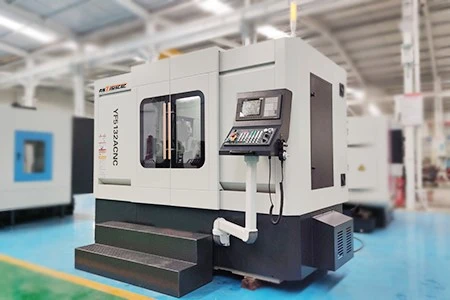
2. Feedback Systems
To ensure that the machine is actually cutting at the specified depth, CNC shaping machines are equipped with feedback systems. These systems use sensors to measure the position of the cutting tool and compare it to the programmed depth.
One common type of sensor used in CNC shaping machines is the linear encoder. This device measures the linear displacement of the cutting tool along the axis of motion. By constantly monitoring the position of the tool, the feedback system can detect any deviations from the programmed depth and make adjustments in real-time.
Another type of sensor is the force sensor. This sensor measures the cutting force exerted by the tool on the workpiece. If the cutting force is too high, it could indicate that the cutting depth is too deep. The feedback system can then adjust the cutting depth to reduce the force and prevent damage to the tool and the workpiece.
3. Axis Control
CNC shaping machines have multiple axes of motion, and the control of these axes is crucial for accurate cutting depth control. The most common axes in a shaping machine are the X, Y, and Z axes. The X and Y axes control the horizontal movement of the cutting tool, while the Z axis controls the vertical movement, which is directly related to the cutting depth.
The CNC controller uses servo motors to drive the axes of motion. These motors are capable of precise positioning, allowing the machine to move the cutting tool to the exact depth specified in the program. The controller also coordinates the movement of the axes to ensure that the cutting tool follows the desired path and maintains the correct cutting depth throughout the machining process.
Factors Affecting Cutting Depth Control
1. Material Properties
The type of material being machined can have a significant impact on the cutting depth control. Different materials have different hardness, toughness, and machinability characteristics. For example, harder materials like steel require smaller cutting depths and higher cutting speeds to avoid excessive tool wear and breakage. Softer materials like aluminum, on the other hand, can tolerate larger cutting depths and lower cutting speeds.
2. Tool Geometry
The geometry of the cutting tool also plays a role in cutting depth control. Tools with different shapes and sizes have different cutting capabilities. For example, a tool with a large cutting edge angle can generally handle larger cutting depths than a tool with a small cutting edge angle. The rake angle of the tool also affects the cutting force and the chip formation, which in turn can influence the cutting depth.
3. Machine Rigidity
The rigidity of the CNC shaping machine is another important factor. A rigid machine can better withstand the cutting forces and vibrations generated during the machining process, which helps to maintain accurate cutting depth control. Machines with poor rigidity may experience deflection under load, leading to inconsistent cutting depths and poor surface finish.
Applications of Precise Cutting Depth Control
1. Gear Manufacturing
One of the most common applications of CNC shaping machines is gear manufacturing. In gear cutting, precise cutting depth control is essential to ensure the correct tooth profile and pitch. A CNC shaping machine can accurately control the cutting depth to produce gears with high precision and quality. Check out our CNC Gear Shaper for more information on gear manufacturing solutions.
2. Mold Making
Mold making also requires precise cutting depth control. Molds often have complex shapes and tight tolerances, and the ability to control the cutting depth accurately is crucial for creating high-quality molds. Our Cnc Gear Shaper Machine can be used in mold making applications to achieve the desired cutting depths and surface finishes.
Conclusion
In conclusion, controlling the cutting depth in a CNC shaping machine is a complex but essential process. It involves programming, feedback systems, axis control, and taking into account various factors such as material properties, tool geometry, and machine rigidity. By understanding how these elements work together, you can ensure that your CNC shaping machine operates at its best and produces high-quality parts.
If you're in the market for a CNC shaping machine or have any questions about cutting depth control, don't hesitate to reach out. We're here to help you find the right solution for your machining needs. Whether you're a small shop or a large manufacturing facility, we have the expertise and the products to meet your requirements. Contact us today to start a conversation about your next project!
References
- Smith, J. (2018). CNC Machining Handbook. Publisher XYZ.
- Johnson, A. (2019). Advanced Manufacturing Technologies. ABC Publications.


