


As a supplier of CNC Horizontal Lathes, I often encounter customers who are confused about the differences between fixed - bed and sliding - bed CNC horizontal lathes. In this blog, I will delve into the details of these two types of lathes to help you make an informed decision when it comes to purchasing.
Structural Design
The most obvious difference between a fixed - bed and a sliding - bed CNC horizontal lathe lies in their structural design.
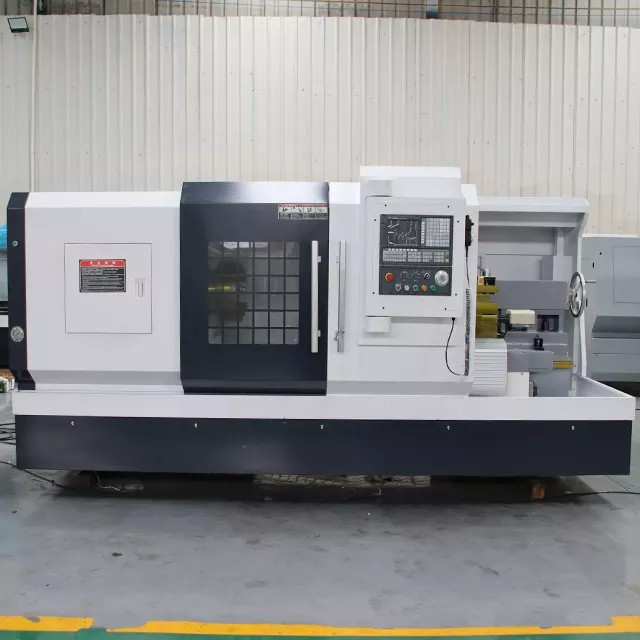
A fixed - bed CNC horizontal lathe, as the name implies, has a stationary bed. The bed is a rigid and stable foundation that provides support for all the other components of the lathe, such as the headstock, tailstock, and carriage. This design ensures high stability during the machining process, which is particularly beneficial for heavy - duty cutting operations. For example, when machining large - diameter and long workpieces, the fixed bed can effectively resist the cutting forces and vibrations, resulting in high - precision machining. You can find more information about fixed - bed lathes on our Flat Bed Lathe Machine page.
On the other hand, a sliding - bed CNC horizontal lathe has a bed that allows the carriage to move along a slanted or inclined plane. This slanted design offers several advantages. One of the key benefits is improved chip evacuation. Since the chips can easily fall off the inclined bed, it reduces the chances of chip re - cutting and damage to the workpiece. Additionally, the slanted bed design provides better access to the workpiece, making it easier for operators to load and unload parts. For more details about sliding - bed lathes, you can visit our Flat Bed CNC Lathe Machine page.
Machining Precision
When it comes to machining precision, both fixed - bed and sliding - bed CNC horizontal lathes have their own characteristics.
Fixed - bed lathes are known for their excellent rigidity. The stationary bed minimizes the deflection caused by cutting forces, which is crucial for achieving high - precision machining. The stable structure allows for accurate control of the cutting tool's movement, resulting in tight tolerances and smooth surface finishes. For applications that require extremely high precision, such as machining aerospace components or high - end automotive parts, fixed - bed lathes are often the preferred choice.
Sliding - bed lathes, while also capable of achieving good precision, may have slightly different performance. The slanted bed design can affect the overall rigidity to some extent. However, modern sliding - bed lathes are equipped with advanced control systems and high - quality components that can compensate for this to a large degree. They are generally well - suited for medium - to high - precision machining tasks, especially for workpieces with complex geometries. You can explore more about precision lathe options on our Flat Bed Lathe page.
Workpiece Capacity
The workpiece capacity is another important factor to consider when comparing fixed - bed and sliding - bed CNC horizontal lathes.
Fixed - bed lathes typically have a larger workpiece capacity. The stable structure of the fixed bed can support heavier and larger - sized workpieces. They can handle long shafts, large - diameter cylinders, and other bulky workpieces with ease. This makes them ideal for industries such as heavy machinery manufacturing, power generation, and shipbuilding.
Sliding - bed lathes, although they can also handle a wide range of workpiece sizes, are more commonly used for medium - sized workpieces. Their design is more focused on providing efficient machining for parts with a certain level of complexity. The easier access provided by the slanted bed allows for quicker setup and machining of medium - sized workpieces, which is beneficial in high - volume production environments.
Cutting Performance
The cutting performance of fixed - bed and sliding - bed CNC horizontal lathes also varies.
Fixed - bed lathes excel in heavy - duty cutting operations. The high rigidity of the bed allows for the use of larger cutting tools and higher cutting parameters. This results in faster material removal rates and the ability to machine hard materials. For example, when machining hardened steel or cast iron, a fixed - bed lathe can withstand the high cutting forces without sacrificing precision.
Sliding - bed lathes are more versatile in terms of cutting operations. They can perform a variety of operations, including turning, facing, threading, and drilling. The improved chip evacuation on the slanted bed ensures smooth cutting processes, which is particularly important for maintaining the quality of the finished workpiece. They are also suitable for high - speed cutting operations, which can significantly increase productivity in some cases.
Cost and Maintenance
Cost is always a consideration when purchasing a CNC horizontal lathe.
Fixed - bed lathes are generally more expensive upfront. The high - quality materials and precision manufacturing required for the rigid bed structure contribute to the higher cost. However, they may offer a better return on investment in the long run, especially for heavy - duty and high - precision machining applications. Maintenance costs for fixed - bed lathes are relatively stable, mainly involving regular lubrication, calibration, and component replacement.
Sliding - bed lathes are often more cost - effective in terms of initial purchase price. The simpler design in some aspects allows for a more affordable price point. Maintenance costs can also be relatively lower, as the slanted bed design reduces the risk of chip accumulation, which can lead to less wear and tear on the components. However, it is important to ensure regular maintenance to keep the machine in optimal condition.

Applications
The choice between a fixed - bed and a sliding - bed CNC horizontal lathe also depends on the specific applications.
Fixed - bed lathes are widely used in industries where heavy - duty and high - precision machining is required. Applications include manufacturing large - scale mechanical parts, such as engine blocks, crankshafts, and axles in the automotive and machinery industries. They are also commonly used in the production of components for the power generation and aerospace industries.
Sliding - bed lathes are popular in industries that require high - volume production of medium - sized workpieces with complex geometries. For example, in the electronics, medical device, and precision instrument manufacturing industries, sliding - bed lathes can quickly and accurately produce small to medium - sized parts.
In conclusion, both fixed - bed and sliding - bed CNC horizontal lathes have their unique advantages and are suitable for different machining needs. When making a decision, you should carefully consider factors such as the type of workpieces you will be machining, the required precision, cutting performance, cost, and application. As a trusted supplier of CNC Horizontal Lathes, we are committed to providing you with the best solutions according to your specific requirements. If you are interested in learning more about our products or have any questions regarding the purchase of fixed - bed or sliding - bed CNC horizontal lathes, please feel free to contact us for a detailed discussion and quotation. We look forward to helping you find the perfect lathe for your business.
References
- Modern Machining Technology Handbook, several editions have detailed discussions on different types of lathes and their characteristics.
- Manufacturing Engineering and Technology by Serope Kalpakjian and Steven R. Schmid, which provides in - depth knowledge about machining processes and equipment selection.


