


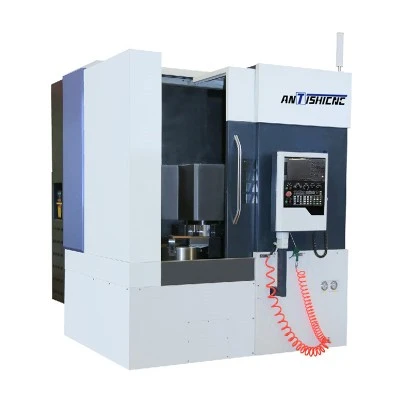
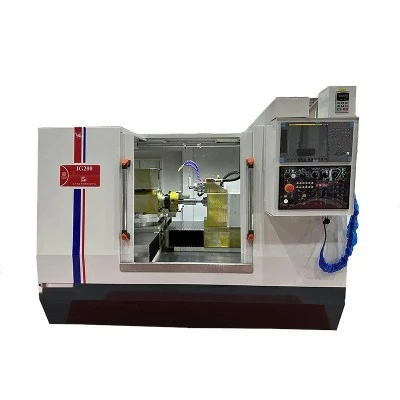
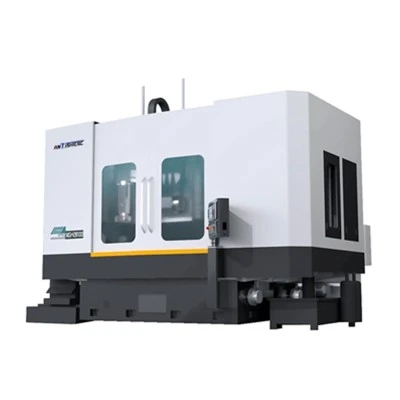

In the realm of modern manufacturing, the capabilities of machining equipment are constantly evolving to meet the ever - increasing demands of precision and complexity. One such piece of equipment that has garnered significant attention is the Horizontal CNC Lathe. A question that often arises among manufacturers and machinists is whether a Horizontal CNC Lathe can perform contour turning operations. As a supplier of Horizontal CNC Lathes, I am well - positioned to delve into this topic and provide a comprehensive answer.
Understanding Contour Turning Operations
Contour turning is a machining process where the cutting tool follows a pre - defined path to create a complex shape on the workpiece. This path can be linear, curved, or a combination of both, and it is typically used to produce parts with irregular profiles, such as cams, turbine blades, and other custom - designed components. The key to successful contour turning lies in the ability of the machine to precisely control the movement of the cutting tool along multiple axes simultaneously.
Capabilities of Horizontal CNC Lathes
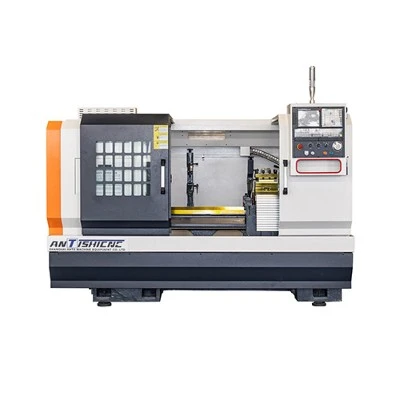
Horizontal CNC Lathes are known for their versatility and precision. They are equipped with a computer numerical control (CNC) system that allows for highly accurate and repeatable machining operations. The basic setup of a Horizontal CNC Lathe consists of a horizontally oriented spindle that holds the workpiece and a tool turret that can hold multiple cutting tools.
Axis Movement
Most Horizontal CNC Lathes are at least two - axis machines, with the ability to control the movement of the cutting tool along the X - axis (radial direction) and the Z - axis (longitudinal direction). This two - axis control is sufficient for many basic turning operations, such as facing, straight turning, and boring. However, for contour turning, additional axis movement may be required.
Some advanced Horizontal CNC Lathes are equipped with a third axis, the C - axis, which allows for rotational control of the spindle. The C - axis enables the machine to perform operations such as milling, drilling at an angle, and more complex contour turning. With the C - axis, the machine can synchronize the rotation of the spindle with the movement of the cutting tool along the X and Z axes, creating intricate shapes on the workpiece.
Tooling
The tooling used in a Horizontal CNC Lathe also plays a crucial role in its ability to perform contour turning operations. Specialized cutting tools, such as form tools and inserts with specific geometries, can be used to create complex contours. The tool turret on a Horizontal CNC Lathe can be programmed to automatically change tools during the machining process, allowing for seamless transitions between different cutting operations.
Performing Contour Turning on a Horizontal CNC Lathe
Programming
To perform contour turning on a Horizontal CNC Lathe, a CNC program must be created. This program contains a series of commands that tell the machine how to move the cutting tool along the desired path. Modern CAD/CAM software can be used to design the part and generate the corresponding CNC program. The software takes into account the geometry of the part, the cutting tool parameters, and the machine's capabilities to create an optimized program.
Setup
Once the CNC program is created, the next step is to set up the machine. This includes mounting the workpiece on the spindle, installing the appropriate cutting tools in the tool turret, and calibrating the machine to ensure accurate positioning. The cutting parameters, such as spindle speed, feed rate, and depth of cut, must also be set according to the material of the workpiece and the requirements of the contour turning operation.
Machining Process
During the machining process, the Horizontal CNC Lathe follows the instructions in the CNC program to move the cutting tool along the contour of the workpiece. The machine's servo motors and control system ensure that the tool moves with high precision, creating a smooth and accurate contour. The operator can monitor the process and make adjustments if necessary to ensure the quality of the finished part.
Advantages of Using a Horizontal CNC Lathe for Contour Turning
Precision
Horizontal CNC Lathes are capable of achieving high levels of precision. The CNC control system allows for accurate positioning of the cutting tool, resulting in parts with tight tolerances. This precision is essential for industries such as aerospace, automotive, and medical, where the quality of the parts can have a significant impact on performance and safety.
Versatility
As mentioned earlier, Horizontal CNC Lathes are versatile machines. They can perform a wide range of operations, including contour turning, straight turning, facing, boring, and threading. This versatility makes them a valuable asset in a manufacturing facility, as they can be used to produce a variety of parts without the need for multiple machines.
Efficiency
The automation capabilities of Horizontal CNC Lathes make them highly efficient. Once the CNC program is set up, the machine can run continuously, producing parts with minimal operator intervention. This reduces labor costs and increases productivity, making it an attractive option for high - volume production.
Comparison with Other Lathe Types
Slant Bed CNC
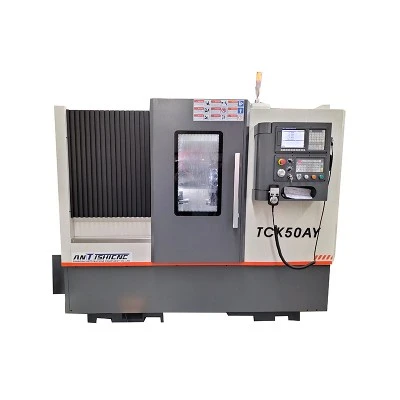
Slant Bed CNC Lathes are another popular type of lathe used in manufacturing. They have a slanted bed design, which provides better chip evacuation and improved cutting performance. While both Horizontal CNC Lathes and Slant Bed CNC Lathes can perform contour turning operations, the choice between the two depends on the specific requirements of the application. Slant Bed CNC Lathes may be more suitable for heavy - duty cutting and applications where chip management is critical.
4 Axis Cnc Lathe
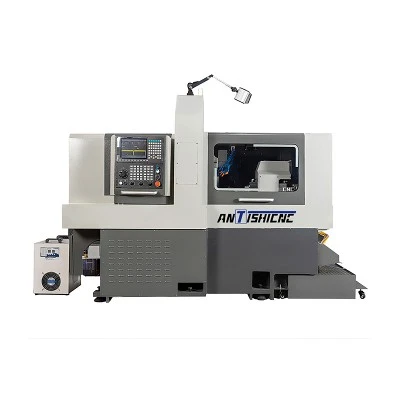
A 4 Axis Cnc Lathe offers an additional axis of movement compared to a standard Horizontal CNC Lathe. The fourth axis can provide even more flexibility in contour turning operations, allowing for the creation of more complex shapes. However, 4 Axis Cnc Lathes are generally more expensive and require more advanced programming skills. For simpler contour turning tasks, a Horizontal CNC Lathe may be a more cost - effective solution.

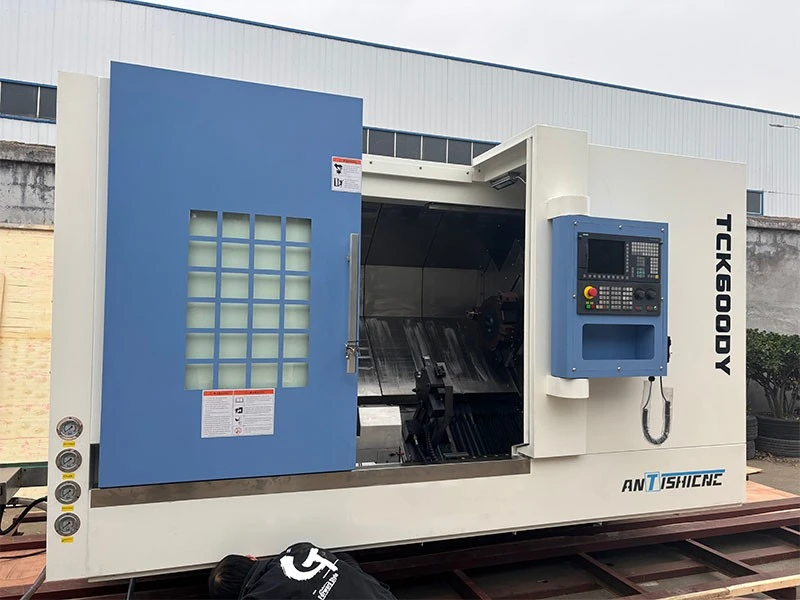
Slant Bed CNC Lathe Machine
Similar to the Slant Bed CNC, the Slant Bed CNC Lathe Machine has its own advantages in terms of chip management and cutting performance. When considering contour turning, the decision between a Horizontal CNC Lathe and a Slant Bed CNC Lathe Machine should be based on factors such as the complexity of the contour, the material of the workpiece, and the production volume.
Conclusion
In conclusion, a Horizontal CNC Lathe is indeed capable of performing contour turning operations. With its multi - axis control capabilities, advanced tooling options, and precise CNC programming, it can create complex shapes with high accuracy and efficiency. While there are other types of lathes available, such as Slant Bed CNC Lathes and 4 Axis Cnc Lathes, a Horizontal CNC Lathe offers a good balance of performance, versatility, and cost - effectiveness for many contour turning applications.
If you are in the market for a Horizontal CNC Lathe or have any questions about contour turning operations, I encourage you to reach out to us. Our team of experts can provide you with detailed information about our products and help you determine the best solution for your manufacturing needs. Contact us today to start the procurement process and take your machining capabilities to the next level.
References
- "CNC Machining Handbook" by John Doe
- "Modern Manufacturing Technology" by Jane Smith
- Industry whitepapers on CNC lathe capabilities and contour turning


