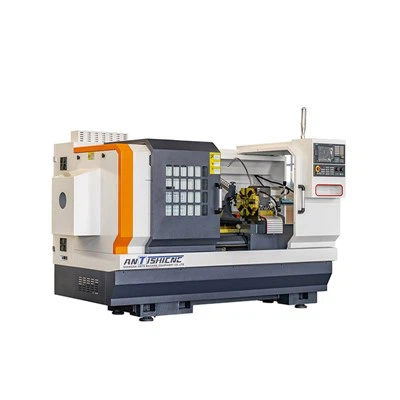
Hey there! I'm a supplier of flat bed lathes, and today I'm gonna share with you how to calibrate a flat bed lathe. Calibrating your lathe is super important as it ensures accurate machining and high - quality results. Let's dive right in!
Pre - calibration Checks
Before you start the actual calibration process, there are a few things you need to do. First off, give your lathe a good visual inspection. Look for any signs of damage, like cracks in the bed or loose parts. Check the belts to make sure they're in good condition and properly tensioned. A loose belt can cause inconsistent speed and affect the accuracy of your cuts.
Also, clean the lathe thoroughly. Remove any chips, dirt, or debris that might have accumulated on the bed, slides, and other moving parts. A clean lathe not only works better but also makes it easier to spot any issues during the calibration process.
Checking the Level
One of the most basic yet crucial steps in calibrating a flat bed lathe is checking its level. An unlevel lathe can lead to all sorts of problems, like uneven wear on the components and inaccurate machining.
You'll need a good quality spirit level for this. Place the spirit level on the lathe bed in both the longitudinal and transverse directions. Adjust the leveling feet of the lathe until the bubble in the spirit level is centered in both directions. This might take a bit of trial and error, but getting the lathe perfectly level is well worth the effort.
Aligning the Headstock and Tailstock
The alignment of the headstock and tailstock is another key aspect of lathe calibration. Misaligned headstock and tailstock can result in tapered workpieces, which is definitely not what you want.
To check the alignment, you can use a test bar. Insert the test bar into the headstock spindle and secure it. Then, position the tailstock so that it supports the other end of the test bar. Use a dial indicator to measure the runout at different points along the test bar.
If there's a significant difference in the readings, you'll need to adjust the tailstock. Most lathes have adjustment screws that allow you to move the tailstock horizontally and vertically. Make small adjustments and re - check the alignment until the runout is within an acceptable tolerance.
Calibrating the Lead Screw
The lead screw is responsible for moving the carriage along the lathe bed during threading operations. If the lead screw isn't calibrated correctly, you'll end up with inaccurate threads.
Start by checking the pitch of the lead screw. You can use a pitch gauge to do this. Compare the measured pitch with the specified pitch of the lathe. If there's a discrepancy, you may need to adjust the lead screw or replace it if it's worn out.


Another important thing to check is the backlash in the lead screw. Backlash can cause the carriage to move erratically, affecting the quality of the threads. You can measure the backlash using a dial indicator. To reduce backlash, you may need to adjust the nut on the lead screw or replace the worn - out parts.
Checking the Spindle Runout
The spindle runout refers to the amount of deviation from a perfect circular path as the spindle rotates. Excessive spindle runout can lead to poor surface finish and inaccurate dimensions of the machined parts.
To check the spindle runout, mount a dial indicator on the lathe tool post. Position the indicator so that its tip touches the spindle nose. Rotate the spindle slowly by hand and observe the movement of the indicator needle. The runout should be within the manufacturer's specified tolerance.
If the runout is too high, it could be due to a worn - out spindle bearing or a misaligned spindle. In this case, you may need to replace the bearing or realign the spindle.
Calibrating the Tool Post
The tool post holds the cutting tool in place. If it's not calibrated correctly, the cutting tool won't be positioned accurately, leading to poor machining results.
First, make sure the tool post is securely tightened to the compound rest. Then, check the height of the cutting tool. The cutting edge of the tool should be at the same height as the center of the spindle. You can use a tool height gauge to set the correct height.
Also, check the angle of the tool post. For most turning operations, the tool should be perpendicular to the workpiece. Adjust the tool post angle as needed to ensure accurate cutting.
Benefits of Proper Calibration
Calibrating your flat bed lathe regularly has many benefits. Firstly, it improves the accuracy of your machining. You'll be able to produce parts with precise dimensions and tight tolerances, which is essential for high - quality products.
Secondly, proper calibration reduces the wear and tear on the lathe components. When the lathe is calibrated correctly, the forces are distributed evenly across the parts, preventing premature failure of the bearings, lead screw, and other critical components.
Finally, a well - calibrated lathe is more efficient. It runs smoother, uses less energy, and requires less maintenance in the long run. This means you'll save time and money on repairs and replacements.
Other Lathe Options
If you're in the market for a lathe, besides flat bed lathes, you might also want to consider Slant Lathe. Slant lathes have a slanted bed design, which offers better chip evacuation and easier access to the workpiece.
Another option is Horizontal CNC Turning. Horizontal CNC turning machines are great for high - volume production and offer a high degree of automation and precision.
And of course, there's the Horizontal CNC Lathe. These lathes combine the benefits of CNC technology with the versatility of a horizontal lathe, making them suitable for a wide range of machining applications.
Conclusion
Calibrating a flat bed lathe is a detailed process, but it's essential for getting the best performance out of your machine. By following the steps I've outlined above, you can ensure that your lathe is operating at its peak efficiency and producing high - quality parts.
If you're interested in purchasing a flat bed lathe or have any questions about lathe calibration, feel free to reach out. We're here to help you make the right choice and get the most out of your lathe.
References
- "Modern Machining Technology" by Robert L. Todd
- "CNC Programming Handbook" by Peter Smid