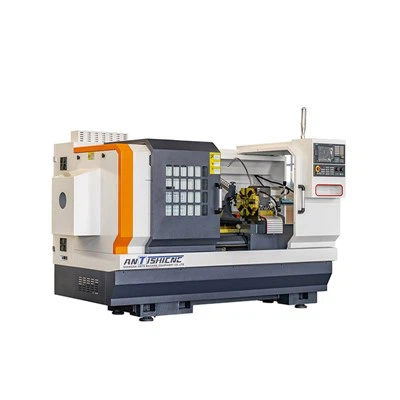
Selecting the appropriate depth of cut on a traditional lathe is a crucial skill that can significantly impact the quality, efficiency, and safety of your machining operations. As a trusted supplier of Traditional Lathe, I understand the importance of making informed decisions when it comes to this aspect of turning operations. In this blog post, I'll share some valuable insights and guidelines to help you determine the right depth of cut for your specific applications.
Understanding the Basics of Depth of Cut
The depth of cut refers to the thickness of the material that is removed in a single pass of the cutting tool during a turning operation on a lathe. It is typically measured perpendicular to the workpiece surface and is a key parameter that influences the cutting forces, power consumption, tool life, and surface finish of the machined part.


A proper depth of cut is essential for achieving the desired dimensional accuracy, surface quality, and productivity. Cutting too deeply can lead to excessive cutting forces, tool wear, and potential damage to the workpiece or the lathe itself. On the other hand, cutting too shallowly may result in inefficient machining, longer cycle times, and poor surface finish.
Factors Affecting the Selection of Depth of Cut
Several factors need to be considered when determining the appropriate depth of cut on a traditional lathe. These include:
Workpiece Material
Different materials have varying hardness, strength, and machinability characteristics, which directly affect the maximum depth of cut that can be safely and effectively achieved. For example, softer materials such as aluminum and brass can generally tolerate larger depths of cut compared to harder materials like steel and titanium. When machining brittle materials, such as cast iron, a smaller depth of cut may be required to prevent cracking or chipping.
Tool Material and Geometry
The type of cutting tool used and its geometry play a significant role in determining the optimal depth of cut. High-speed steel (HSS) tools are commonly used for general-purpose machining and can handle moderate depths of cut. Carbide tools, on the other hand, are more suitable for high-speed machining and can withstand higher cutting forces, allowing for larger depths of cut. The tool's rake angle, clearance angle, and nose radius also influence the cutting performance and the maximum depth of cut that can be achieved.
Lathe Capacity and Rigidity
The size, power, and rigidity of the lathe are important considerations when selecting the depth of cut. Larger and more powerful lathes, such as Extra Heavy Duty Lathe Machine, can generally handle larger depths of cut compared to smaller, less powerful models. The lathe's rigidity is also crucial, as excessive vibration or deflection can lead to poor surface finish, tool wear, and inaccurate machining.
Surface Finish Requirements
The desired surface finish of the machined part is another factor that affects the selection of depth of cut. In general, a smaller depth of cut will result in a smoother surface finish, while a larger depth of cut may leave a rougher surface. If a high-quality surface finish is required, multiple passes with smaller depths of cut may be necessary.
Machining Efficiency
Balancing the depth of cut with the feed rate and cutting speed is essential for achieving optimal machining efficiency. A larger depth of cut can reduce the number of passes required to remove the material, thereby reducing the cycle time. However, increasing the depth of cut also increases the cutting forces and power consumption, which may limit the maximum achievable feed rate and cutting speed.
Guidelines for Selecting the Depth of Cut
Based on the factors mentioned above, here are some general guidelines to help you select the appropriate depth of cut on a traditional lathe:
Start with a Small Depth of Cut
When machining a new workpiece or using a new cutting tool, it's always a good idea to start with a small depth of cut and gradually increase it as you gain more experience and confidence. This allows you to evaluate the cutting performance, monitor the tool wear, and make any necessary adjustments to the cutting parameters.
Consider the Workpiece Material
As a general rule, softer materials can tolerate larger depths of cut compared to harder materials. For example, when machining aluminum, a depth of cut of 0.050 to 0.100 inches (1.27 to 2.54 mm) may be appropriate, while for steel, a depth of cut of 0.010 to 0.050 inches (0.25 to 1.27 mm) may be more suitable.
Match the Tool Material and Geometry
Select a cutting tool that is appropriate for the workpiece material and the desired depth of cut. Carbide tools are generally recommended for high-speed machining and larger depths of cut, while HSS tools are more suitable for general-purpose machining and smaller depths of cut. Make sure the tool's geometry, such as the rake angle and clearance angle, is optimized for the specific machining application.
Check the Lathe Capacity
Before making a cut, ensure that the lathe is capable of handling the selected depth of cut. Refer to the lathe's manual or specifications to determine the maximum allowable cutting forces and power consumption. If you're unsure, consult with a qualified machinist or the lathe manufacturer.
Evaluate the Surface Finish Requirements
If a high-quality surface finish is required, consider using multiple passes with smaller depths of cut. This can help to reduce the surface roughness and improve the overall appearance of the machined part.
Optimize the Machining Efficiency
To achieve the best balance between machining efficiency and quality, experiment with different combinations of depth of cut, feed rate, and cutting speed. Use a cutting data handbook or online resources to obtain recommended cutting parameters for the specific workpiece material and cutting tool.
Example of Depth of Cut Selection
Let's consider an example of machining a steel workpiece on a 7 Feet Lathe Machine using a carbide cutting tool. The workpiece has a diameter of 2 inches (50.8 mm) and a length of 6 inches (152.4 mm), and the desired surface finish is Ra 32 microinches (0.8 micrometers).
Based on the guidelines mentioned above, we can start with a small depth of cut of 0.010 inches (0.25 mm) and gradually increase it as needed. We can also select a feed rate of 0.005 inches per revolution (0.127 mm/rev) and a cutting speed of 300 surface feet per minute (91.44 meters per minute).
After making the first pass, we can evaluate the cutting performance and the surface finish of the machined part. If the cutting forces are within the acceptable range and the surface finish meets the requirements, we can increase the depth of cut to 0.020 inches (0.51 mm) for the next pass. We can continue this process until we reach the desired final diameter of the workpiece.
Conclusion
Selecting the appropriate depth of cut on a traditional lathe is a critical step in achieving high-quality machining results. By considering the factors discussed in this blog post and following the guidelines provided, you can make informed decisions and optimize your turning operations for maximum efficiency and productivity.
As a supplier of Traditional Lathe, we are committed to providing our customers with the highest quality products and expert advice. If you have any questions or need further assistance with selecting the right depth of cut for your specific application, please don't hesitate to contact us. We look forward to working with you to meet your machining needs.
References
- ASM Handbook, Volume 16: Machining, ASM International, 2008
- Machinery's Handbook, 31st Edition, Industrial Press Inc., 2016
- Tooling U-SME, Machining Fundamentals, 2021