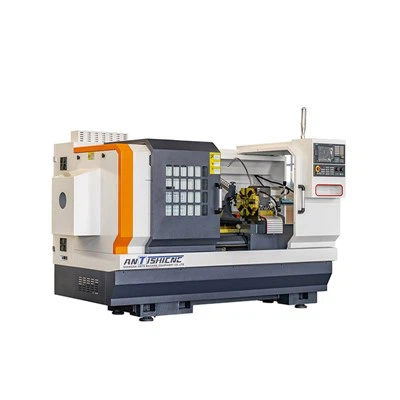
Hey there! As a supplier of cylindrical machines, I've seen firsthand the ins and outs of these nifty pieces of equipment. They're super useful in a bunch of industries, but like any tool, they come with their fair share of challenges. Let's dive into what those challenges are and how we can deal with them.


Precision and Accuracy
One of the biggest headaches when using a cylindrical machine is achieving the right level of precision and accuracy. Whether you're using an External Cylindrical Grinding Machine or a CNC Od Grinder, getting the dimensions just right is crucial. Even the tiniest error can lead to parts that don't fit together properly or don't perform as expected.
The problem often lies in the machine itself. Over time, wear and tear can cause the components to shift or become less precise. Things like spindle runout, which is when the spindle doesn't rotate perfectly in the center, can throw off your measurements. And if the machine isn't properly calibrated, you're going to have a tough time getting accurate results.
Another factor is the material you're working with. Different materials have different properties, like hardness and thermal expansion. For example, metals expand when they're heated during the machining process. If you're not accounting for this, you might end up with parts that are the right size at room temperature but change dimensions when they're in use.
To tackle these issues, regular maintenance is a must. You need to keep an eye on the machine's components and replace any that are showing signs of wear. Calibration should also be done on a regular basis to ensure everything is in line. And when it comes to materials, you need to do your research and understand how they'll behave during the machining process.
Surface Finish
The surface finish of the parts you're creating is another challenge. A poor surface finish can affect the functionality of the part, as well as its appearance. With a cylindrical machine, getting a smooth and consistent surface can be tricky.
One of the main culprits is the cutting tool. If the tool is dull or not the right type for the material, it can leave rough marks on the surface. Chip formation also plays a role. If the chips aren't being removed properly, they can get caught between the tool and the workpiece, causing scratches and other imperfections.
The feed rate and cutting speed are also important. If they're too high or too low, it can affect the surface finish. For example, a high feed rate might cause the tool to dig in too deeply, leaving rough grooves. On the other hand, a low cutting speed might not generate enough heat to cut through the material cleanly, resulting in a rough surface.
To improve the surface finish, you need to choose the right cutting tool for the job. Make sure it's sharp and in good condition. You also need to optimize the feed rate and cutting speed based on the material and the type of machining you're doing. And don't forget about chip management. Using proper coolant and chip evacuation systems can help keep the surface clean.
Workpiece Holding
Properly holding the workpiece in place is essential for accurate machining. If the workpiece moves or vibrates during the process, it can lead to errors in the dimensions and surface finish.
There are different ways to hold a workpiece in a cylindrical machine, like using chucks, collets, or fixtures. But each method has its own challenges. For example, chucks need to be tightened evenly to prevent the workpiece from slipping. If they're not, the workpiece might move during machining, causing inaccuracies.
Collets, on the other hand, are great for holding round workpieces, but they can be tricky to use with irregularly shaped parts. And fixtures need to be designed and manufactured to fit the specific workpiece. If they're not, they might not hold the workpiece securely enough.
Another issue is vibration. Even if the workpiece is held tightly, vibrations from the machine itself or the cutting process can cause problems. These vibrations can lead to chatter marks on the surface of the part and affect the overall accuracy.
To address these issues, you need to choose the right holding method for the workpiece. Make sure it's installed correctly and tightened properly. You might also need to use vibration dampening techniques, like adding rubber pads or using anti-vibration mounts.
Machine Setup and Programming
Setting up a cylindrical machine and programming it to perform the desired operations can be a challenge, especially for those who are new to using these machines.
The setup process involves things like mounting the workpiece, installing the cutting tool, and adjusting the machine's settings. Each step needs to be done carefully to ensure everything is in the right place. And if you're using a CNC (Computer Numerical Control) machine, programming it can be even more complex.
You need to understand the programming language used by the machine and know how to write the code to control the movements of the tool and the workpiece. Even a small mistake in the code can lead to major problems during the machining process.
To make things easier, many modern cylindrical machines come with user-friendly interfaces and programming software. These tools can help simplify the setup and programming process. But it still takes time and practice to become proficient.
Cost and Efficiency
Cylindrical machines can be expensive to purchase, operate, and maintain. The initial investment in a high-quality machine can be quite substantial. And then there are the ongoing costs, like energy consumption, tooling, and maintenance.
In addition, achieving high efficiency can be a challenge. If the machine isn't being used to its full potential, you're wasting resources and money. For example, if the setup time is too long or the machining process is taking longer than necessary, it's going to eat into your profits.
To manage costs and improve efficiency, you need to look at the big picture. Consider the long-term benefits of investing in a high-quality machine that will be more reliable and efficient. Look for ways to reduce setup time, like using quick-change tooling systems. And optimize your machining processes to minimize waste and increase productivity.
Conclusion
As you can see, using a cylindrical machine comes with its fair share of challenges. But with the right knowledge and approach, these challenges can be overcome. Whether you're dealing with precision and accuracy, surface finish, workpiece holding, machine setup, or cost and efficiency, there are solutions available.
If you're in the market for a cylindrical machine or are looking to improve your current machining processes, I'd love to have a chat. We've got a range of high-quality machines and can provide you with the support and expertise you need to get the most out of them. So don't hesitate to reach out and let's start a conversation about how we can help you achieve your machining goals.
References
- ASM Handbook, Volume 16: Machining, ASM International
- Manufacturing Engineering Handbook, by Myer Kutz