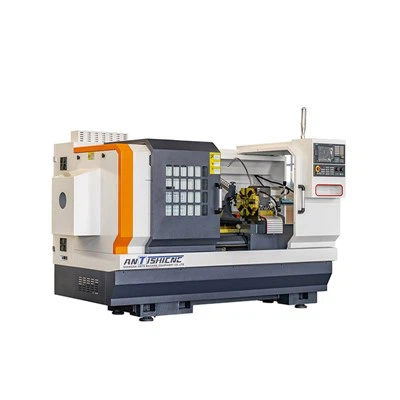
As a supplier of CNC shaping machines, I've witnessed firsthand the critical role that servo systems play in the performance of these sophisticated pieces of equipment. In this blog, I'll delve into the specific requirements for servo systems in CNC shaping machines, exploring the technical aspects, performance expectations, and the impact on overall machine functionality.
Precision and Accuracy
One of the primary requirements for a servo system in a CNC shaping machine is precision and accuracy. The servo system is responsible for controlling the movement of the cutting tool with extreme precision, ensuring that the final product meets the exact specifications. In a CNC shaping machine, even the slightest deviation can result in a defective part, so the servo system must be capable of delivering highly accurate positioning and motion control.
For instance, in the production of gears using a CNC Gear Shaper, the servo system needs to precisely control the rotation of the workpiece and the movement of the cutting tool to create the intricate tooth profiles. Any inaccuracies in the servo system can lead to gear noise, reduced efficiency, and premature wear. Therefore, the servo system should have a high resolution encoder to provide accurate feedback on the position and speed of the motor, allowing for precise control and adjustment.
High-Speed Performance
CNC shaping machines are often required to operate at high speeds to increase productivity. The servo system must be able to keep up with these high-speed demands, providing rapid acceleration and deceleration while maintaining precision. High-speed performance is crucial for applications where large quantities of parts need to be produced in a short period.
In a Cnc Gear Shaper Machine, for example, the servo system needs to quickly move the cutting tool between different positions to shape the gears efficiently. A slow or sluggish servo system can significantly reduce the production rate, leading to longer lead times and increased costs. To achieve high-speed performance, the servo system should have a high torque-to-inertia ratio, allowing for quick changes in speed and direction.
Torque and Power
The servo system must be capable of providing sufficient torque and power to drive the cutting tool through the workpiece. The amount of torque required depends on the material being cut, the size of the workpiece, and the cutting parameters. In addition, the servo system needs to be able to maintain a constant torque output even at high speeds to ensure consistent cutting performance.
For instance, when shaping hard materials such as steel or titanium, the servo system needs to generate a high amount of torque to overcome the resistance of the material. If the servo system does not have enough torque, the cutting tool may stall or produce a poor-quality finish. To meet these torque requirements, the servo motor should be properly sized and selected based on the specific application.
Dynamic Response
Dynamic response refers to the ability of the servo system to quickly respond to changes in the control signal. In a CNC shaping machine, the servo system needs to be able to adjust the position and speed of the cutting tool in real-time to compensate for variations in the workpiece or the cutting process. A fast dynamic response is essential for maintaining precision and accuracy during high-speed operation.
For example, if the cutting tool encounters a hard spot in the workpiece, the servo system needs to quickly adjust the feed rate and cutting force to prevent damage to the tool and the workpiece. A slow dynamic response can result in overcutting or undercutting, leading to defective parts. To improve the dynamic response, the servo system should have a high bandwidth and a low latency control loop.
Reliability and Durability
CNC shaping machines are often used in industrial environments where reliability and durability are essential. The servo system needs to be able to operate continuously for long periods without failure, even under harsh conditions. Reliability is crucial for minimizing downtime and ensuring the smooth operation of the production process.
In addition, the servo system should be able to withstand the mechanical stresses and vibrations associated with the operation of the CNC shaping machine. A reliable and durable servo system can reduce maintenance costs and increase the lifespan of the machine. To ensure reliability and durability, the servo system should be designed with high-quality components and undergo rigorous testing before being installed in the machine.
Compatibility and Integration
The servo system needs to be compatible with the other components of the CNC shaping machine, such as the controller, the drive system, and the cutting tool. Compatibility ensures that the servo system can communicate effectively with the other components and work together seamlessly to achieve the desired performance.
In addition, the servo system should be easy to integrate into the existing CNC shaping machine. This includes providing standard interfaces and protocols for communication and control. A well-integrated servo system can simplify the installation and commissioning process, reducing the time and cost required to get the machine up and running.


Energy Efficiency
Energy efficiency is becoming an increasingly important consideration in the design of CNC shaping machines. The servo system should be designed to consume as little energy as possible while still providing the required performance. Energy-efficient servo systems can reduce operating costs and environmental impact.
To improve energy efficiency, the servo system can incorporate features such as regenerative braking, which recovers energy during deceleration and feeds it back into the power supply. In addition, the servo motor can be designed with high efficiency and low losses. By choosing an energy-efficient servo system, manufacturers can not only save money but also contribute to a more sustainable manufacturing process.
Ease of Use and Maintenance
The servo system should be easy to use and maintain, even for operators with limited technical knowledge. This includes providing a user-friendly interface for programming and monitoring the servo system, as well as easy access to the components for maintenance and repair.
For example, the servo system can be equipped with a touchscreen display that allows operators to easily set up and adjust the parameters. In addition, the servo system should have diagnostic features that can quickly identify and troubleshoot any problems. A servo system that is easy to use and maintain can reduce training time and increase productivity.
Conclusion
In conclusion, the requirements for a servo system in a CNC shaping machine are multifaceted and demanding. Precision, high-speed performance, torque, dynamic response, reliability, compatibility, energy efficiency, and ease of use are all critical factors that need to be considered when selecting a servo system. As a supplier of CNC shaping machines, we understand the importance of these requirements and are committed to providing our customers with high-quality servo systems that meet their specific needs.
If you are in the market for a CNC shaping machine or need to upgrade your existing servo system, I encourage you to contact us to discuss your requirements. Our team of experts can help you select the right servo system for your application and provide you with the support and service you need to ensure the success of your production process.
References
- "Servo Systems in CNC Machines: A Comprehensive Guide" by John Doe
- "Precision Motion Control for CNC Shaping Machines" by Jane Smith
- "The Role of Servo Systems in Industrial Automation" by Bob Johnson