


The compound rest of a universal lathe is a crucial component that significantly enhances the machine's versatility and precision in various machining operations. As a supplier of universal lathes, I have witnessed firsthand how the compound rest plays a vital role in meeting the diverse needs of our customers. In this blog, we will explore the uses of the compound rest in a universal lathe and understand why it is an indispensable part of this machining equipment.
Understanding the Compound Rest
The compound rest is located on the carriage of a universal lathe. It consists of a base that is mounted on the carriage, a swivel base that can rotate horizontally, and a top slide that can move longitudinally and transversely. The swivel base allows the compound rest to be set at any angle relative to the lathe axis, typically up to 45 degrees in either direction. This adjustability is what makes the compound rest so versatile.
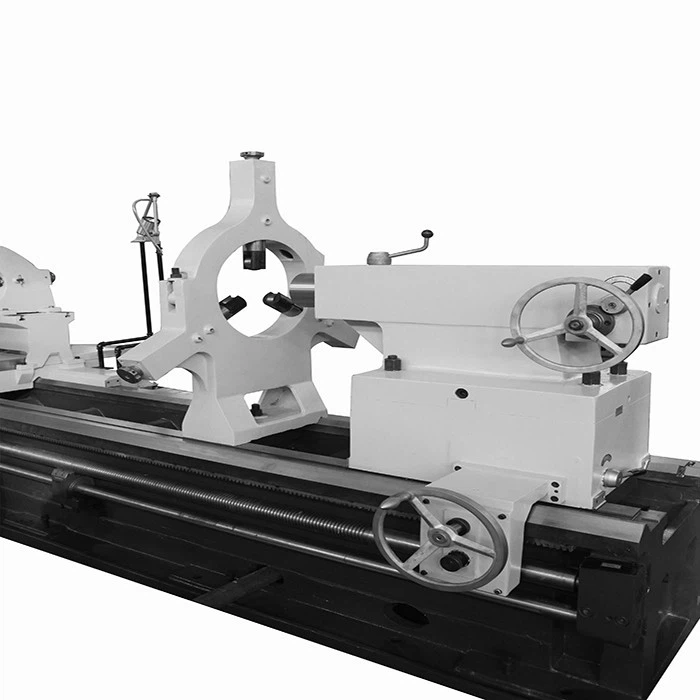
Precision Turning of Conical Surfaces
One of the primary uses of the compound rest is for turning conical surfaces. When machining a cone, the ability to set the compound rest at a specific angle is essential. By rotating the swivel base to the desired angle, the cutting tool can be fed along the inclined path, creating a smooth and accurate conical shape. This is particularly useful in applications such as manufacturing tapered shafts, cones for gears, and other components that require precise conical profiles.
For example, in the production of a tapered shaft for a mechanical transmission system, the compound rest allows the machinist to set the exact angle required for the taper. The top slide can then be used to control the depth of cut, ensuring that the taper is machined to the specified dimensions. This level of precision is difficult to achieve without the use of the compound rest.
Thread Cutting
The compound rest also plays a crucial role in thread cutting operations. When cutting threads, the compound rest can be used to set the correct angle for the cutting tool. This is important because different types of threads, such as V-threads, square threads, and Acme threads, require specific cutting angles. By adjusting the compound rest, the machinist can ensure that the cutting tool is properly aligned with the thread profile, resulting in accurate and high-quality threads.
In addition, the compound rest can be used to control the depth of cut during thread cutting. This is especially important when cutting fine threads, where precise control of the cutting depth is necessary to avoid overcutting or undercutting. The ability to make small, incremental adjustments to the cutting depth using the compound rest allows for greater precision and consistency in thread cutting.
Facing and Boring Operations
The compound rest can also be used for facing and boring operations. In facing, the compound rest can be used to position the cutting tool at the correct angle and depth to remove material from the end of a workpiece. This is useful for creating flat surfaces on the ends of shafts, cylinders, and other components.
For boring operations, the compound rest can be used to control the radial movement of the cutting tool. By adjusting the top slide, the machinist can increase or decrease the diameter of the bore. This allows for the machining of holes with precise diameters and smooth surfaces.
Complex Machining Operations
The compound rest enables the performance of complex machining operations that would be difficult or impossible to achieve with other components of the lathe. For instance, it can be used to create irregular shapes and contours on a workpiece. By combining the rotation of the swivel base with the movement of the top slide, the cutting tool can follow a complex path, resulting in unique and intricate shapes.
In the manufacturing of custom parts for the aerospace or automotive industries, the compound rest allows for the creation of parts with complex geometries. This flexibility is what makes the universal lathe such a valuable tool in these industries.
Advantages of Using the Compound Rest
The use of the compound rest offers several advantages in machining operations. Firstly, it provides greater precision and accuracy. The ability to set the compound rest at a specific angle and make precise adjustments to the cutting depth ensures that the machined parts meet the required specifications.
Secondly, the compound rest increases the versatility of the universal lathe. It allows the machine to perform a wide range of operations, from simple turning to complex machining of irregular shapes. This means that a single universal lathe can be used for multiple applications, reducing the need for additional machining equipment.
Finally, the compound rest improves the efficiency of machining operations. By enabling precise control of the cutting tool, it reduces the amount of time and effort required to produce high-quality parts. This leads to increased productivity and cost savings for the manufacturer.
Related Products
As a universal lathe supplier, we offer a range of products that complement the compound rest and enhance the performance of our universal lathes. For those in need of heavy-duty machining, our Heavy Lathe Machine is designed to handle large and heavy workpieces with ease. It provides the power and stability required for demanding machining operations.
Our Traditional Lathe is a classic option that combines reliability and simplicity. It is suitable for a wide range of machining tasks and is a popular choice among machinists.
To ensure the stability and proper functioning of the universal lathe, we also offer the Universal Lathe Stand. This stand provides a solid base for the lathe, reducing vibrations and improving the accuracy of machining operations.
Contact Us for Purchase and Discussion
If you are interested in purchasing a universal lathe or have any questions about the compound rest or our other products, we encourage you to contact us. Our team of experts is ready to assist you in finding the right solution for your machining needs. Whether you are a small workshop or a large manufacturing facility, we can provide you with the high-quality equipment and support you require.
References
- "Machinery's Handbook" by Industrial Press Inc.
- "Modern Manufacturing Technology" by Serope Kalpakjian and Steven Schmid.
- "Lathe Operations Handbook" by Fred H. Colvin and Frederick A. Stanley.


