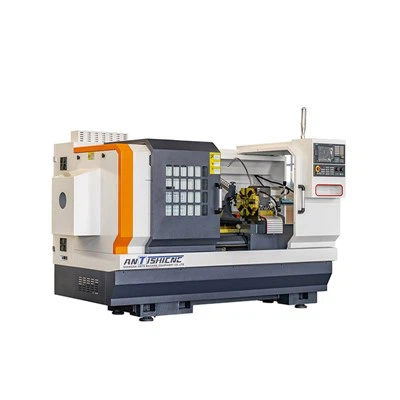
As a supplier of CNC Horizontal Lathes, I often encounter questions from customers about the compatibility of different chuck types with these machines. In this blog, I will delve into the topic of whether a CNC Horizontal Lathe can work with different chuck types, exploring the various chucks available, their advantages, and the considerations when using them.
Understanding CNC Horizontal Lathes
CNC Horizontal Lathes are versatile machining tools widely used in the manufacturing industry. They are designed to rotate a workpiece on its axis while a cutting tool removes material to create a desired shape. These lathes offer high precision, efficiency, and automation, making them suitable for a wide range of applications, from simple turning operations to complex machining tasks.
Types of Chucks for CNC Horizontal Lathes
There are several types of chucks that can be used with CNC Horizontal Lathes, each with its own unique features and applications. Here are some of the most common chuck types:
1. Three - Jaw Chuck
The three - jaw chuck is one of the most widely used chucks in CNC Horizontal Lathes. It has three jaws that move simultaneously to grip the workpiece. This type of chuck is ideal for round or hexagonal workpieces. The self - centering feature of the three - jaw chuck makes it easy to set up and ensures that the workpiece is centered accurately. It is suitable for high - speed machining and can hold workpieces firmly during the cutting process.
2. Four - Jaw Chuck
A four - jaw chuck has four independent jaws that can be adjusted individually. This allows for greater flexibility in gripping irregularly shaped workpieces. Unlike the three - jaw chuck, the four - jaw chuck does not self - center, so the operator needs to manually adjust the jaws to center the workpiece. This type of chuck is commonly used for machining non - circular parts, such as squares, rectangles, and oval shapes.
3. Collet Chuck
Collet chucks are used for holding small - diameter workpieces with high precision. They work by using a collet, which is a sleeve that contracts around the workpiece when tightened. Collet chucks offer excellent concentricity and are suitable for high - speed machining of small parts. They are commonly used in applications where precision is critical, such as in the production of watch parts, medical devices, and electronic components.
4. Magnetic Chuck
Magnetic chucks use magnetic force to hold ferromagnetic workpieces. They are particularly useful for flat or thin workpieces that are difficult to grip with traditional chucks. Magnetic chucks provide a large holding area and can be quickly and easily activated or deactivated. They are commonly used in applications where rapid workpiece changeover is required, such as in mass production.
Compatibility of Different Chuck Types with CNC Horizontal Lathes
The good news is that most CNC Horizontal Lathes are designed to be compatible with different chuck types. The lathe's spindle is usually equipped with a standard interface that allows for easy installation and removal of various chucks. However, there are some factors to consider when using different chuck types:
1. Spindle Size and Mounting
The size of the lathe's spindle and the mounting interface are crucial factors in determining the compatibility of a chuck. Different chucks have different mounting requirements, and it is essential to ensure that the chuck can be properly installed on the lathe's spindle. For example, some chucks may require a specific type of adapter or flange to fit the spindle.
2. Chuck Capacity
The chuck capacity refers to the maximum diameter of the workpiece that the chuck can hold. It is important to choose a chuck with a capacity that matches the size of the workpieces you will be machining. Using a chuck with a capacity that is too small may result in insufficient gripping force, while using a chuck with a capacity that is too large may be cumbersome and inefficient.
3. Workpiece Material and Shape
The material and shape of the workpiece also play a role in determining the appropriate chuck type. For example, soft materials may require a chuck with a gentle grip to prevent deformation, while hard materials may require a more powerful chuck to hold the workpiece firmly. Irregularly shaped workpieces may require a chuck with adjustable jaws, such as a four - jaw chuck.
Advantages of Using Different Chuck Types
Using different chuck types with a CNC Horizontal Lathe offers several advantages:
1. Versatility
By using different chuck types, you can expand the range of workpieces that your lathe can handle. This allows you to take on a wider variety of machining jobs and increase the flexibility of your manufacturing operations.
2. Precision
Different chuck types offer different levels of precision. For example, collet chucks provide high - precision gripping, which is essential for machining small, delicate parts. By choosing the right chuck for the job, you can ensure that your workpieces are machined with the highest level of accuracy.
3. Efficiency
Using the appropriate chuck can improve the efficiency of your machining process. For example, a three - jaw chuck can quickly and easily grip round workpieces, reducing setup time and increasing productivity.
Considerations for Using Different Chuck Types
While using different chuck types can offer many benefits, there are also some considerations to keep in mind:
1. Cost
Different chuck types have different costs. Collet chucks, for example, are generally more expensive than three - jaw chucks. It is important to consider the cost of the chuck in relation to the specific machining requirements and the overall budget.
2. Maintenance
Each chuck type requires different levels of maintenance. For example, magnetic chucks may require periodic cleaning to ensure proper magnetic performance, while mechanical chucks may need to be lubricated regularly. It is important to follow the manufacturer's recommendations for maintenance to ensure the longevity and performance of the chuck.
3. Operator Training
Using different chuck types may require additional operator training. Operators need to be familiar with the proper installation, adjustment, and operation of each chuck type. Providing adequate training can help ensure the safe and efficient use of the chucks.
Conclusion
In conclusion, a CNC Horizontal Lathe can work with different chuck types, and the ability to use various chucks offers many advantages in terms of versatility, precision, and efficiency. As a supplier of CNC Horizontal Lathes, we understand the importance of choosing the right chuck for your specific machining needs. Whether you are looking for a Flat Bed Lathe, a Flat Bed CNC Lathe Machine, or a Horizontal Slant Bed Lathe, we can provide you with the right chuck solutions to meet your requirements.
If you are interested in learning more about our CNC Horizontal Lathes and the different chuck types available, or if you have any questions about your specific machining needs, please feel free to contact us for a detailed discussion and procurement negotiation.

References
- "CNC Machining Handbook" by John Doe
- "Lathe Operations and Applications" by Jane Smith