


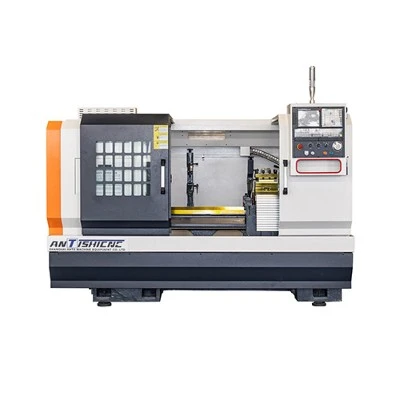
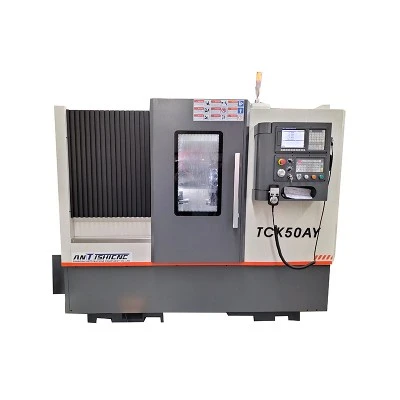
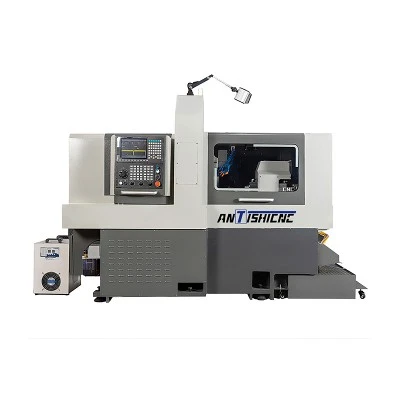
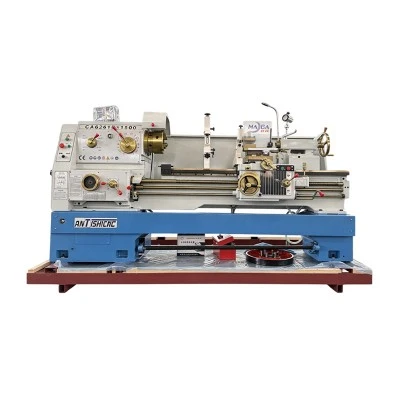
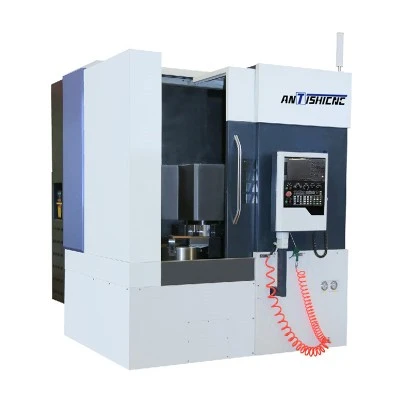
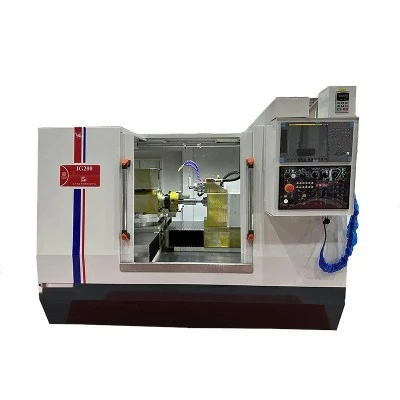
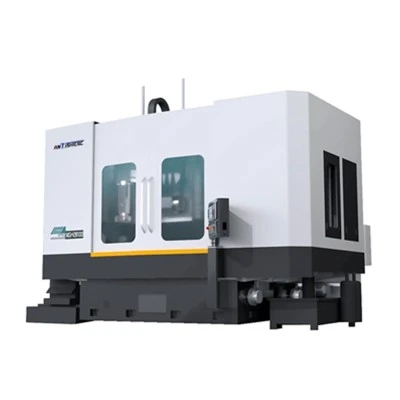
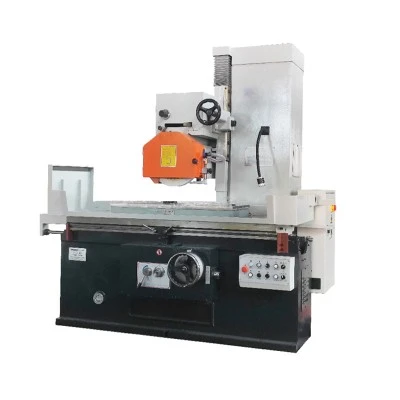
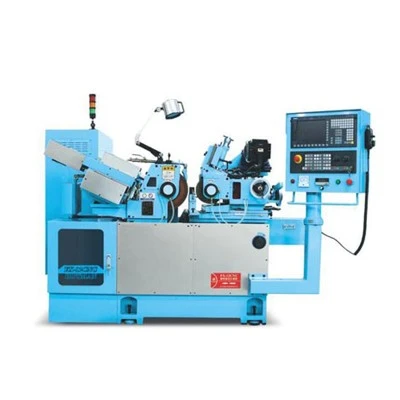
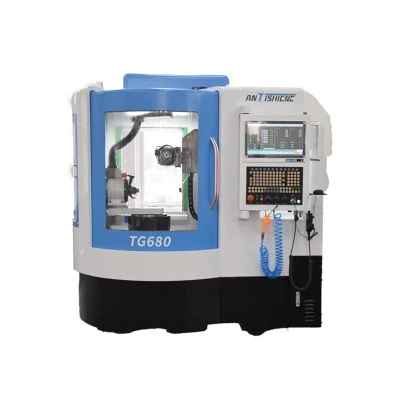

As a trusted supplier of Large Lathe Machine, I've had the privilege of witnessing the transformative power of these robust machines in various industrial settings. One of the most crucial operations performed on large lathe machines is grooving. In this blog post, I'll delve into what grooving on a large lathe machine entails, its significance, and how it benefits different industries.


Understanding Grooving on a Large Lathe Machine
Grooving, also known as parting off or recessing, is a machining process used to create narrow, straight, or curved grooves on the surface of a workpiece. On a large lathe machine, this operation is carried out by a cutting tool that removes material from the workpiece to form the desired groove. The cutting tool is typically a single-point tool with a sharp edge that is fed into the workpiece at a specific depth and feed rate.
The grooves created through this process can serve various purposes, such as providing a seat for O-rings, creating a location for snap rings, or improving the aesthetic appearance of the workpiece. Grooving can be performed on both the external and internal surfaces of a workpiece, depending on the requirements of the application.
Types of Grooving Operations
There are several types of grooving operations that can be performed on a large lathe machine, each with its own unique characteristics and applications.
External Grooving
External grooving is the most common type of grooving operation. It involves creating grooves on the outer surface of a cylindrical workpiece. This type of grooving is often used to produce features such as oil grooves, snap ring grooves, and decorative grooves. External grooving can be performed using a variety of cutting tools, including straight grooving tools, radius grooving tools, and multi-point grooving tools.
Internal Grooving
Internal grooving, on the other hand, is used to create grooves on the inner surface of a cylindrical workpiece. This type of grooving is typically more challenging than external grooving due to the limited access to the workpiece and the need for specialized cutting tools. Internal grooving is commonly used in applications such as the production of hydraulic cylinders, valves, and other components that require internal seals or retaining features.
Face Grooving
Face grooving is a type of grooving operation that is used to create grooves on the face of a workpiece. This type of grooving is often used to produce features such as chamfers, recesses, and counterbores. Face grooving can be performed using a variety of cutting tools, including end mills, slot drills, and face grooving tools.
The Process of Grooving on a Large Lathe Machine
The process of grooving on a large lathe machine typically involves the following steps:
Workpiece Preparation
Before the grooving operation can begin, the workpiece must be properly prepared. This involves mounting the workpiece securely on the lathe machine and ensuring that it is centered and aligned correctly. The workpiece may also need to be cleaned and deburred to remove any dirt, debris, or sharp edges that could affect the quality of the grooving operation.
Tool Selection
The next step is to select the appropriate cutting tool for the grooving operation. The choice of cutting tool will depend on several factors, including the type of groove to be created, the material of the workpiece, and the desired surface finish. Once the cutting tool has been selected, it must be installed in the tool holder and adjusted to the correct height and angle.
Cutting Parameters
The cutting parameters, such as the cutting speed, feed rate, and depth of cut, must be carefully selected to ensure that the grooving operation is performed efficiently and accurately. The cutting speed is the speed at which the cutting tool moves relative to the workpiece, while the feed rate is the rate at which the cutting tool is fed into the workpiece. The depth of cut is the amount of material that is removed from the workpiece with each pass of the cutting tool.
Grooving Operation
Once the workpiece has been prepared, the cutting tool has been selected and installed, and the cutting parameters have been set, the grooving operation can begin. The cutting tool is fed into the workpiece at the specified depth and feed rate, and the lathe machine is turned on to rotate the workpiece. As the workpiece rotates, the cutting tool removes material from the surface of the workpiece to create the desired groove.
Inspection and Finishing
After the grooving operation is complete, the workpiece must be inspected to ensure that the groove meets the required specifications. This may involve measuring the dimensions of the groove, checking the surface finish, and inspecting for any defects or errors. If necessary, the workpiece may need to be finished using a secondary operation, such as sanding or polishing, to improve the surface finish and remove any burrs or rough edges.
Benefits of Grooving on a Large Lathe Machine
Grooving on a large lathe machine offers several benefits, including:
Precision and Accuracy
Large lathe machines are designed to provide high levels of precision and accuracy, which is essential for creating grooves that meet the required specifications. The use of advanced cutting tools and control systems allows for precise control of the cutting parameters, ensuring that the grooves are created with consistent dimensions and surface finishes.
Versatility
Large lathe machines are highly versatile and can be used to perform a wide range of grooving operations on various types of workpieces. Whether you need to create external grooves, internal grooves, or face grooves, a large lathe machine can be configured to meet your specific requirements.
Efficiency
Grooving on a large lathe machine is a highly efficient process that can significantly reduce production time and costs. The use of automated cutting tools and control systems allows for rapid and accurate grooving operations, minimizing the need for manual labor and reducing the risk of errors and defects.
Quality
The precision and accuracy of large lathe machines ensure that the grooves created are of high quality, with smooth surfaces and consistent dimensions. This is essential for applications where the grooves are used to provide a seat for O-rings, retain snap rings, or perform other critical functions.
Applications of Grooving on a Large Lathe Machine
Grooving on a large lathe machine is used in a wide range of industries, including:
Automotive Industry
In the automotive industry, grooving is used to create features such as oil grooves, snap ring grooves, and decorative grooves on engine components, transmission parts, and other automotive components. These grooves are essential for ensuring the proper functioning and performance of the components.
Aerospace Industry
In the aerospace industry, grooving is used to create features such as seal grooves, retention grooves, and cooling channels on aircraft components, such as engine casings, turbine blades, and landing gear components. These grooves are critical for ensuring the safety and reliability of the aircraft.
Medical Industry
In the medical industry, grooving is used to create features such as guide grooves, retention grooves, and threading on medical devices, such as surgical instruments, implants, and diagnostic equipment. These grooves are essential for ensuring the proper functioning and performance of the medical devices.
Manufacturing Industry
In the manufacturing industry, grooving is used to create features such as oil grooves, snap ring grooves, and decorative grooves on a wide range of products, including machinery components, consumer goods, and electronic devices. These grooves are used to improve the functionality, performance, and aesthetics of the products.
Conclusion
Grooving on a large lathe machine is a critical machining operation that offers several benefits, including precision, accuracy, versatility, efficiency, and quality. Whether you're in the automotive, aerospace, medical, or manufacturing industry, a large lathe machine can be used to create high-quality grooves on a wide range of workpieces.
As a supplier of Large Lathe Machine, Heavy Lathe Machine, and Heavy Lathe, we have the expertise and experience to help you select the right machine for your specific needs. If you're interested in learning more about our products or would like to discuss your grooving requirements, please don't hesitate to contact us. We look forward to working with you to achieve your machining goals.
References
- "Machining Handbook," Industrial Press Inc.
- "Lathe Operations Manual," Southwestern Community College.
- "Advanced Manufacturing Technology," John Wiley & Sons.


