


Hey there! As a supplier of CNC horizontal lathes, I often get asked about the maximum weight of the work - piece that these machines can handle. It's a crucial question, especially for businesses that deal with heavy - duty machining tasks. So, let's dig into this topic and find out what factors influence the maximum work - piece weight and what you can expect from different types of CNC horizontal lathes.
First off, it's important to understand that the maximum weight capacity of a CNC horizontal lathe isn't a one - size - fits - all number. There are several factors that come into play. One of the most significant factors is the machine's construction and design. A lathe built with a robust frame and high - quality components is generally going to be able to handle heavier work - pieces. For example, a lathe with a solid cast iron bed is likely to be more stable and have a higher weight capacity compared to one with a lighter frame.
Another factor is the spindle size and power. The spindle is the part of the lathe that holds and rotates the work - piece. A larger spindle diameter and more powerful spindle motor can usually handle heavier loads. This is because a bigger spindle has more surface area to grip the work - piece, and a more powerful motor can provide the necessary torque to rotate it smoothly.
The type of CNC horizontal lathe also matters a great deal. Two common types are the Slant Bed CNC and the Flatbed CNC.
Let's start with the Slant Bed CNC. These lathes are known for their excellent chip evacuation and rigidity. The slant bed design allows chips to fall away from the work - area more easily, which reduces the risk of damage to the work - piece and the cutting tools. In terms of weight capacity, slant bed CNC lathes can vary quite a bit. Smaller models might be able to handle work - pieces up to around 500 pounds, while larger, industrial - grade Slant Bed CNC Lathe Machine can handle weights of several tons. The larger ones are often used in heavy - duty industries like aerospace and automotive manufacturing, where large and heavy components need to be machined with high precision.
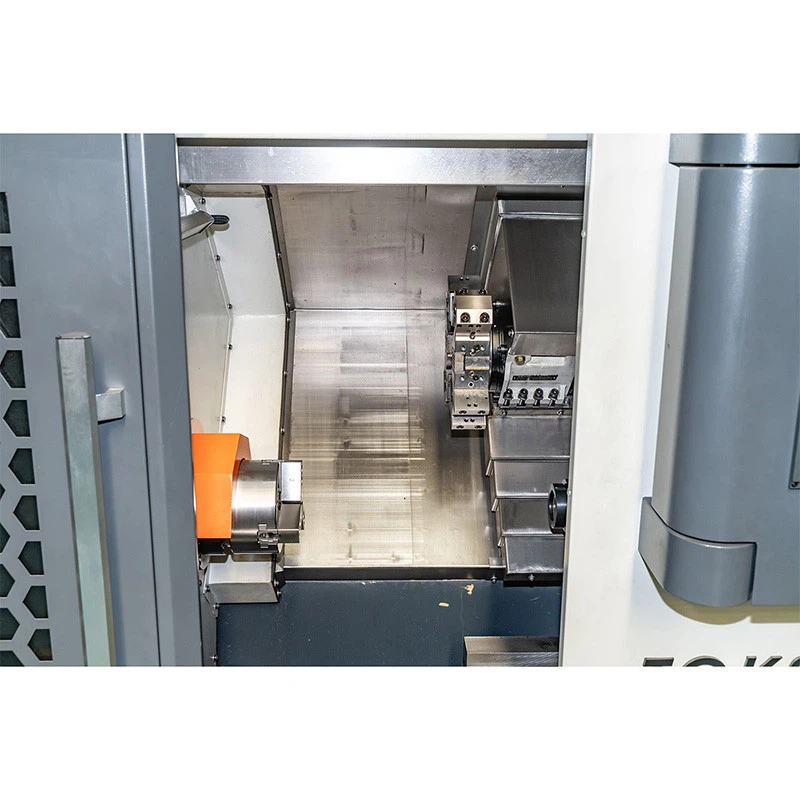

On the other hand, flatbed CNC lathes have a more traditional design. They are typically more suitable for handling very long and heavy work - pieces. The flatbed provides a stable platform for the work - piece, which is important when dealing with large weights. Some flatbed CNC lathes can handle work - pieces weighing over 10 tons. These are often used in industries such as oil and gas, where large pipes and shafts need to be machined.
But it's not just about the machine itself. The way the work - piece is mounted also affects the maximum weight that can be handled. If the work - piece is not properly centered and balanced on the spindle, it can cause excessive vibrations and put extra stress on the machine. This can not only reduce the accuracy of the machining process but also potentially damage the lathe. So, proper work - piece mounting and balancing are essential, especially when dealing with heavy work - pieces.
The cutting tools used on the lathe also play a role. Different cutting tools have different cutting forces, and using the wrong tool for a heavy work - piece can lead to problems. For example, a tool with a large cutting edge might generate too much force, which can cause the work - piece to move or the machine to malfunction. So, it's important to choose the right cutting tools based on the weight and material of the work - piece.
Now, let's talk about how to determine the maximum weight capacity for your specific needs. If you're in the market for a CNC horizontal lathe, the first step is to assess your machining requirements. Consider the size, weight, and material of the work - pieces you'll be working with on a regular basis. If you mainly deal with small and light work - pieces, a smaller and more affordable lathe might be sufficient. But if you need to machine large and heavy components, you'll need a lathe with a higher weight capacity.
It's also a good idea to consult with a professional. As a supplier, I've helped many customers choose the right lathe for their needs. I can provide you with detailed information about the weight capacities of different models and help you understand how they will perform in your specific application.
In addition to the weight capacity, you should also consider other factors such as the lathe's precision, speed, and ease of use. A high - precision lathe is essential for producing high - quality parts, especially in industries where tight tolerances are required. And a lathe that is easy to operate can save you time and money in the long run.
If you're interested in learning more about our CNC horizontal lathes or have any questions about the maximum weight capacity, don't hesitate to reach out. We're here to help you find the perfect lathe for your business. Whether you're a small - scale workshop or a large - scale manufacturing plant, we have a solution that will meet your needs.
In conclusion, the maximum weight of the work - piece that a CNC horizontal lathe can handle depends on many factors, including the machine's design, spindle size, type of lathe, work - piece mounting, and cutting tools. By carefully considering these factors and consulting with a professional, you can choose the right lathe for your specific machining requirements. So, if you're in the market for a CNC horizontal lathe, give us a call or send us an email, and let's start the conversation about finding the perfect machine for you.
References
- General knowledge in the field of CNC machining and lathe technology.
- Industry standards and specifications for CNC horizontal lathes.


