


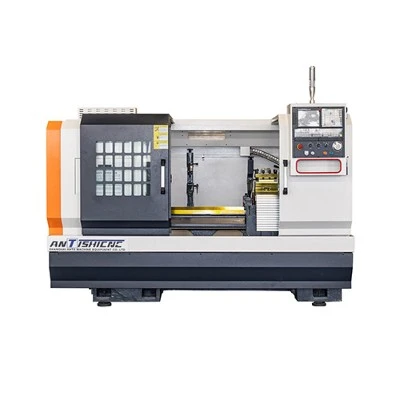
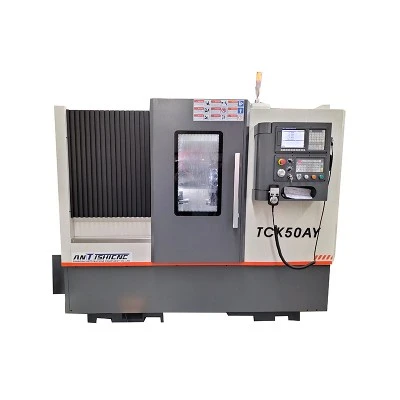
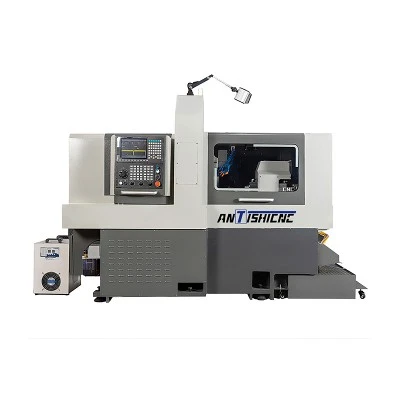
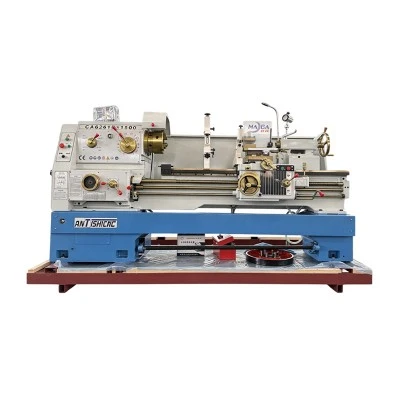
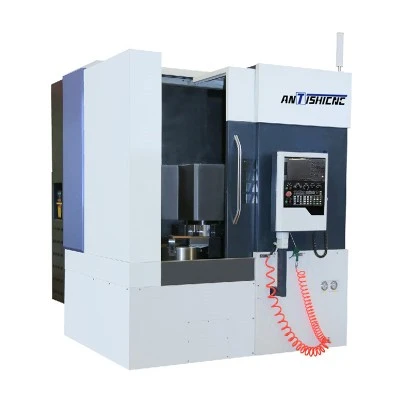
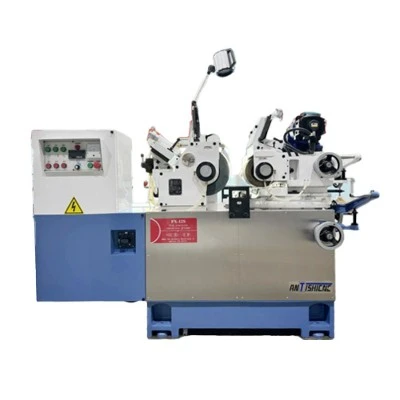
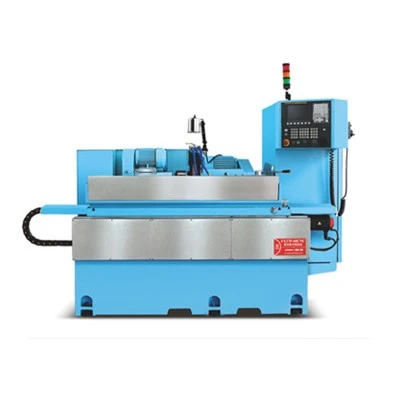
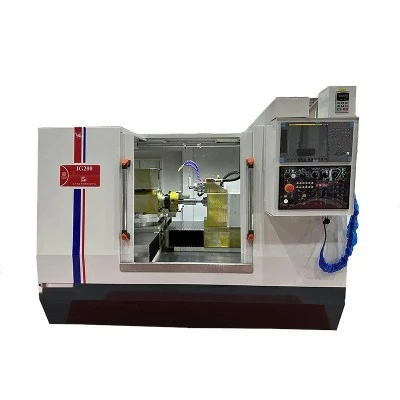
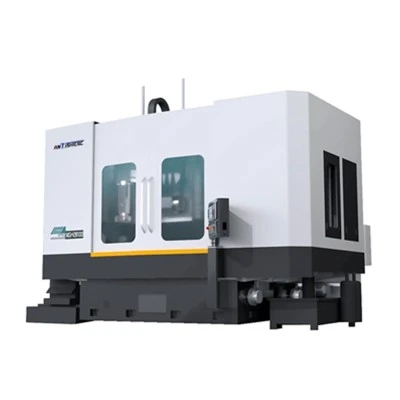
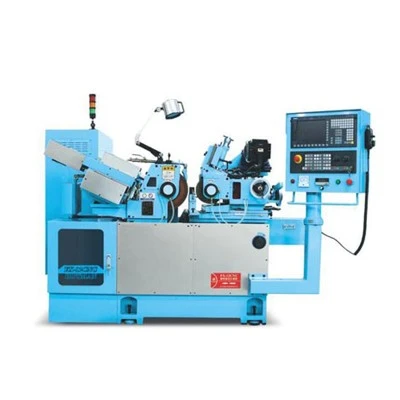
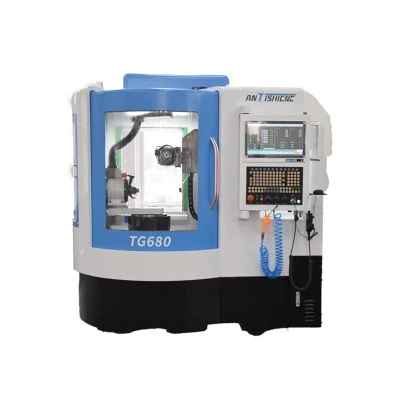

Operating a horizontal CNC lathe demands a diverse skill set that encompasses technical knowledge, practical proficiency, and problem - solving abilities. As a supplier of Horizontal CNC Lathe, I have witnessed firsthand the importance of these skills in ensuring efficient and high - quality machining operations.
Technical Knowledge
Understanding of CNC Programming
One of the fundamental skills required to operate a horizontal CNC lathe is a solid understanding of CNC programming. CNC (Computer Numerical Control) programming involves creating a set of instructions that the lathe's computer system can interpret to control the movement of the cutting tools and the workpiece.
The most commonly used programming language for CNC lathes is G - code. G - code consists of a series of commands that specify the movement of the tool, the feed rate, the spindle speed, and other parameters. For example, the G00 command is used for rapid positioning, while G01 is for linear interpolation. Operators need to be able to write, read, and modify G - code programs to produce the desired parts.
In addition to G - code, operators should also be familiar with M - code, which is used to control auxiliary functions such as coolant on/off, spindle direction, and tool changes. A good understanding of these codes allows operators to optimize the machining process and ensure the proper functioning of the lathe.
Knowledge of Machining Processes
A comprehensive knowledge of machining processes is essential for operating a horizontal CNC lathe. This includes understanding different types of cutting operations such as turning, facing, boring, threading, and grooving.
Turning is the most basic operation on a lathe, where the workpiece rotates while the cutting tool moves along the axis of rotation to remove material. Facing is used to create a flat surface on the end of the workpiece. Boring is the process of enlarging an existing hole, and threading is used to create screw threads on the workpiece. Grooving is used to cut grooves or recesses on the surface of the workpiece.
Operators need to know the appropriate cutting parameters for each operation, such as cutting speed, feed rate, and depth of cut. These parameters depend on factors such as the material of the workpiece, the type of cutting tool, and the desired surface finish. For example, when machining a hard material like stainless steel, a lower cutting speed and a smaller depth of cut may be required compared to machining a softer material like aluminum.
Understanding of Tooling
Another important aspect of operating a horizontal CNC lathe is understanding tooling. Different cutting tools are used for different machining operations, and operators need to know how to select the right tool for the job.
There are various types of cutting tools available for a lathe, including turning inserts, boring bars, drills, and taps. Each tool has its own characteristics and is designed for specific applications. For example, turning inserts come in different shapes and geometries, such as triangular, square, and round, and each shape is suitable for different cutting operations.
Operators should also be able to properly install and set up the cutting tools on the lathe. This includes ensuring the correct tool height, alignment, and clamping. Improper tool setup can lead to poor surface finish, inaccurate dimensions, and even damage to the tool or the workpiece.
Practical Proficiency
Machine Setup and Calibration
Before starting a machining operation, operators need to set up and calibrate the horizontal CNC lathe. This involves mounting the workpiece securely on the chuck or collet, installing the appropriate cutting tools, and setting the zero point for the coordinate system.
Mounting the workpiece correctly is crucial to ensure its stability during machining. The chuck or collet should be tightened properly to prevent the workpiece from slipping or vibrating. Operators also need to make sure that the workpiece is centered accurately to avoid dimensional errors.
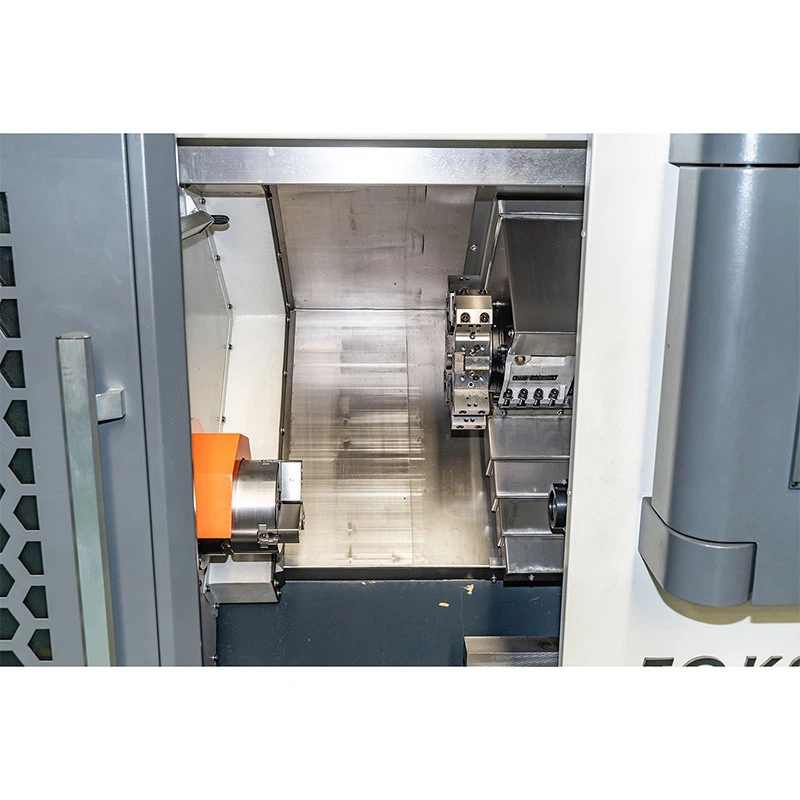

Calibrating the lathe involves setting the correct tool offsets, which are used to compensate for the differences in tool length and diameter. Tool offsets are entered into the CNC control system, and the lathe uses these values to position the cutting tool accurately. Incorrect tool offsets can result in inaccurate machining dimensions.
Operation of the CNC Control System
The CNC control system is the brain of the horizontal CNC lathe, and operators need to be proficient in its operation. This includes loading and editing programs, setting up parameters, and running the machine.
Loading a program into the CNC control system is usually done by connecting a USB drive or other storage device to the machine. Operators need to be able to navigate the control system's menu to select the correct program and make any necessary modifications.
Setting up parameters such as cutting speed, feed rate, and coolant flow is also an important part of operating the control system. These parameters can be adjusted during the machining process to optimize the performance of the lathe.
Running the machine involves starting the program and monitoring the machining process. Operators need to be able to observe the cutting operation, check for any signs of problems such as excessive vibration or tool wear, and make adjustments as needed.
Inspection and Quality Control
Inspection and quality control are essential steps in the machining process. Operators need to be able to use measuring tools such as calipers, micrometers, and gauges to check the dimensions of the machined parts.
After each machining operation, operators should measure the critical dimensions of the part to ensure that they meet the required specifications. If any dimensions are out of tolerance, operators need to make adjustments to the machining process, such as changing the cutting parameters or tool offsets.
In addition to dimensional inspection, operators should also check the surface finish of the part. A smooth surface finish is often required for many applications, and operators need to know how to achieve it through proper selection of cutting parameters and tools.
Problem - Solving Abilities
Troubleshooting Machining Issues
During the operation of a horizontal CNC lathe, various problems may arise, such as tool breakage, chatter, and dimensional errors. Operators need to have good troubleshooting skills to identify and resolve these issues quickly.
Tool breakage can occur due to factors such as incorrect cutting parameters, tool wear, or improper tool setup. When a tool breaks, operators need to stop the machine immediately and replace the damaged tool. They also need to analyze the cause of the tool breakage and make adjustments to prevent it from happening again.
Chatter is a vibration that occurs during machining, which can result in poor surface finish and reduced tool life. Operators need to be able to identify the source of the chatter, such as improper cutting parameters, loose tooling, or workpiece instability, and take appropriate measures to eliminate it.
Dimensional errors can be caused by a variety of factors, including incorrect tool offsets, machine wear, or thermal expansion. Operators need to use their knowledge of machining processes and the lathe's operation to diagnose the problem and make the necessary corrections.
Maintenance and Repair
Regular maintenance and repair of the horizontal CNC lathe are essential to ensure its long - term performance and reliability. Operators should have a basic understanding of the lathe's mechanical, electrical, and hydraulic systems and be able to perform routine maintenance tasks such as lubrication, cleaning, and inspection.
Lubrication is important to reduce friction and wear between moving parts. Operators need to know the correct type of lubricant to use and the appropriate intervals for lubrication. Cleaning the lathe regularly helps to prevent the accumulation of chips and debris, which can cause damage to the machine.
In addition to routine maintenance, operators should also be able to identify and report any potential problems with the lathe. If a major repair is required, they should know how to communicate the issue to the maintenance team or the supplier.
Conclusion
Operating a horizontal CNC lathe requires a combination of technical knowledge, practical proficiency, and problem - solving abilities. As a supplier of Horizontal CNC Lathe, we understand the importance of these skills in ensuring the success of our customers' machining operations. If you are interested in purchasing a horizontal CNC lathe or need more information about operating and maintaining these machines, we encourage you to contact us for a detailed discussion and procurement negotiation.
References
- "CNC Programming Handbook" by Peter Smid
- "Machining Fundamentals" by John A. Schey
- "Lathe Operations Manual" provided by the lathe manufacturer


