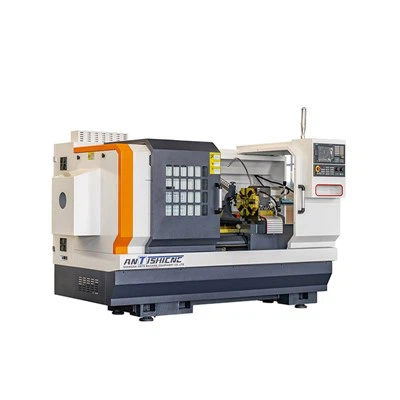
Can a CNC horizontal lathe be used for multi - step turning operations?
As a supplier of CNC horizontal lathes, I often encounter inquiries from customers regarding the capabilities of these machines, especially their suitability for multi - step turning operations. In this blog post, I'll delve into the details of whether a CNC horizontal lathe can indeed be used for such complex tasks.
Understanding Multi - Step Turning Operations
Multi - step turning operations involve a series of sequential machining processes on a workpiece. These processes can include rough turning, finishing turning, facing, grooving, threading, and more. Each step has a specific purpose, such as removing large amounts of material quickly during rough turning or achieving a high - quality surface finish during finishing turning. The ability to perform multiple steps on a single machine is highly desirable as it reduces setup time, increases efficiency, and improves the overall accuracy of the finished part.


Capabilities of CNC Horizontal Lathes
CNC horizontal lathes are highly versatile machines that are well - suited for multi - step turning operations. Here are some of the key features that enable them to handle such tasks:
Precision Control
One of the primary advantages of a CNC horizontal lathe is its precise control over the cutting tools. The computer numerical control (CNC) system allows for accurate positioning of the cutting tool along multiple axes. This precision is crucial for multi - step turning operations, as it ensures that each step is performed with the exact dimensions and tolerances required. For example, when threading a workpiece, the CNC system can precisely control the pitch and depth of the threads, resulting in high - quality threads that meet the specified standards.
Tool Changer
Most modern CNC horizontal lathes are equipped with an automatic tool changer. This feature allows the machine to switch between different cutting tools quickly and efficiently. In multi - step turning operations, different tools are often required for each step. For instance, a roughing tool may be used to remove the bulk of the material, followed by a finishing tool to achieve a smooth surface finish. With an automatic tool changer, the machine can swap tools without manual intervention, reducing setup time and increasing productivity.
Programmability
The programmability of CNC horizontal lathes is another significant advantage for multi - step turning operations. Operators can create a detailed program that specifies the sequence of operations, tool paths, cutting speeds, and feed rates for each step. This program can be stored in the CNC system and recalled whenever the same part needs to be machined. This not only ensures consistency in the manufacturing process but also allows for easy modification of the program if design changes are required.
Rigidity and Stability
CNC horizontal lathes are designed to be rigid and stable, which is essential for performing multi - step turning operations. The heavy - duty construction of the machine helps to minimize vibrations during cutting, resulting in better surface finishes and more accurate dimensions. Additionally, the stability of the machine allows for higher cutting speeds and feeds, which can significantly reduce machining time.
Examples of Multi - Step Turning Operations on a CNC Horizontal Lathe
Let's take a look at a few examples of how a CNC horizontal lathe can be used for multi - step turning operations:
Shaft Manufacturing
When manufacturing a shaft, the first step is usually rough turning to remove the excess material and bring the workpiece close to the desired diameter. The CNC horizontal lathe can use a large - diameter roughing tool to quickly remove the bulk of the material. After rough turning, a finishing tool is used to achieve the final diameter and surface finish. The machine can also perform facing operations on the ends of the shaft to ensure they are flat and perpendicular to the axis of the shaft. Finally, if required, the lathe can cut grooves or threads on the shaft using the appropriate tools.
Flange Production
For flange production, the CNC horizontal lathe can perform multiple steps. First, the outer diameter of the flange is rough turned, followed by finishing turning to achieve the required size and surface finish. Then, the face of the flange is machined to make it flat. If the flange has holes, the lathe can be equipped with a drilling or boring tool to create the holes at the specified locations. Finally, the edges of the flange can be chamfered using a chamfering tool.
Limitations and Considerations
While CNC horizontal lathes are capable of performing multi - step turning operations, there are some limitations and considerations to keep in mind:
Workpiece Size and Shape
The size and shape of the workpiece can affect the ability of the CNC horizontal lathe to perform multi - step turning operations. Extremely large or complex - shaped workpieces may require special fixtures or additional machining processes. For example, if a workpiece has a very long length - to - diameter ratio, it may be prone to deflection during cutting, which can affect the accuracy of the machining.
Tooling Requirements
The availability of suitable cutting tools is crucial for multi - step turning operations. Different steps may require different types of tools, and it's important to have a comprehensive tool library. Additionally, the cost of tooling can be a significant factor, especially for complex operations that require specialized tools.
Operator Skill
Although CNC horizontal lathes are highly automated, operator skill is still essential. Operators need to have a good understanding of the machining process, programming, and tool selection. They also need to be able to troubleshoot any issues that may arise during the machining process.
Conclusion
In conclusion, a CNC horizontal lathe is well - suited for multi - step turning operations. Its precision control, tool changer, programmability, and rigidity make it a versatile machine that can handle a wide range of machining tasks. Whether you're manufacturing shafts, flanges, or other turned parts, a CNC horizontal lathe can provide the accuracy and efficiency required for high - quality production.
If you're interested in exploring the capabilities of our CNC horizontal lathes for your multi - step turning operations, or if you have any questions about our products, we encourage you to [initiate a contact for procurement discussion]. Our team of experts is ready to assist you in finding the right solution for your manufacturing needs.
For more information about our related products, you can visit the following links:
CNC Turn Mill Center Machine
Horizontal CNC Turning
Horizontal Slant Bed Lathe
References
- "CNC Machining Handbook" - A comprehensive guide to CNC machining processes and operations.
- "Modern Manufacturing Technology" - Covers the latest advancements in manufacturing technology, including CNC horizontal lathes.
- Industry research reports on the capabilities and applications of CNC horizontal lathes.