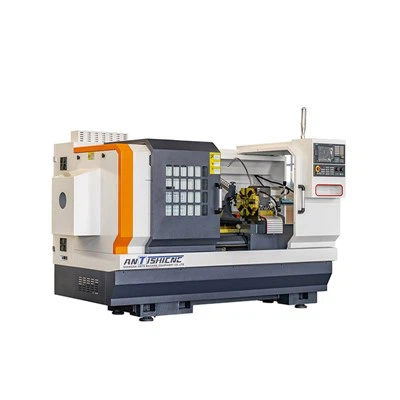
As a supplier of large lathe machines, understanding the cutting speed of these industrial workhorses is crucial. Cutting speed plays a pivotal role in determining the efficiency, quality, and cost - effectiveness of machining operations. In this blog, we'll delve into what the cutting speed of a large lathe machine is, how it's calculated, and the factors that influence it.
What is Cutting Speed?
Cutting speed, often denoted as (V), is defined as the relative velocity between the cutting tool and the workpiece at the cutting edge. In the context of a large lathe machine, it represents how fast the surface of the rotating workpiece passes by the cutting tool. The unit of cutting speed is typically meters per minute (m/min) or feet per minute (ft/min).
Let's say you're using a Parrallel Lathe Machine to turn a cylindrical metal workpiece. The cutting speed determines how quickly the tool can remove material from the workpiece. A higher cutting speed generally means faster material removal, but it also comes with its own set of considerations.
Calculating Cutting Speed
The cutting speed of a large lathe machine can be calculated using the following formula:
[V=\pi DN/1000]
Where:
- (V) is the cutting speed in meters per minute (m/min).
- (D) is the diameter of the workpiece in millimeters (mm).
- (N) is the rotational speed of the workpiece in revolutions per minute (RPM).
For example, if you have a workpiece with a diameter (D = 200) mm and the lathe is running at a rotational speed (N= 300) RPM, the cutting speed (V) can be calculated as follows:
[V=\frac{\pi\times200\times300}{1000}\approx 188.5\ m/min]
This calculation is fundamental as it allows machinists to set the appropriate parameters on the lathe machine. By adjusting either the diameter of the workpiece or the rotational speed, they can achieve the desired cutting speed for a particular machining operation.
Factors Influencing Cutting Speed
Several factors influence the cutting speed of a large lathe machine. These factors need to be carefully considered to ensure optimal performance and quality of the machined parts.
Workpiece Material
Different materials have different properties, which directly affect the cutting speed. For instance, softer materials like aluminum can generally tolerate higher cutting speeds compared to harder materials such as stainless steel or titanium. When using a Heavy Lathe to machine aluminum, you can typically set a relatively high cutting speed. However, when machining stainless steel, you'll need to reduce the cutting speed to avoid excessive tool wear and poor surface finish.
Tool Material
The type of cutting tool material also plays a significant role. High - speed steel (HSS) tools are suitable for a wide range of materials but have limitations in terms of cutting speed. Carbide tools, on the other hand, can withstand much higher cutting speeds. If you're using a Heavy Duty Metal Lathe with carbide - tipped tools, you can achieve faster cutting speeds and better productivity compared to using HSS tools.
Tool Geometry
The geometry of the cutting tool, including the rake angle, clearance angle, and cutting edge radius, affects the cutting speed. A well - designed tool geometry can reduce cutting forces and improve chip formation, allowing for higher cutting speeds. For example, a tool with a positive rake angle reduces the cutting force, which may enable a higher cutting speed.
Coolant and Lubrication
Using coolant and lubrication during the machining process can significantly impact the cutting speed. Coolants help to dissipate heat generated during cutting, reducing tool wear and improving the surface finish. Lubricants reduce friction between the tool and the workpiece, allowing for smoother cutting operations. By using the appropriate coolant and lubrication, you can increase the cutting speed without sacrificing tool life or part quality.
Importance of Optimal Cutting Speed
Setting the optimal cutting speed on a large lathe machine is essential for several reasons.


Productivity
A higher cutting speed generally leads to faster material removal, which means more parts can be produced in a given time. This directly improves the productivity of the machining process. However, it's important to find the right balance as excessive cutting speeds can lead to premature tool wear and other issues.
Tool Life
Using the correct cutting speed helps to extend the life of the cutting tools. If the cutting speed is too high, the tool will experience excessive wear and may break prematurely. On the other hand, if the cutting speed is too low, the tool may not cut efficiently, leading to longer machining times and potentially poor surface finish.
Surface Finish
The cutting speed affects the surface finish of the machined parts. A proper cutting speed ensures a smooth and uniform surface finish, which is crucial for parts that require high precision and aesthetics.
Adjusting Cutting Speed in Practice
In real - world machining operations, machinists often need to adjust the cutting speed based on the specific requirements of the job. They start by referring to cutting speed charts provided by tool manufacturers, which offer recommended cutting speeds for different workpiece materials and tool types.
However, these charts are just a starting point. Machinists may need to make on - the - spot adjustments based on factors such as the condition of the machine, the quality of the workpiece material, and the desired surface finish. They can do this by changing the rotational speed of the lathe or using a different cutting tool.
Conclusion
As a supplier of large lathe machines, we understand the importance of cutting speed in the machining process. It's a complex parameter that is influenced by multiple factors, and getting it right is crucial for achieving optimal productivity, tool life, and part quality.
If you're in the market for a large lathe machine or need more information about cutting speeds and other machining parameters, we're here to assist you. Our team of experts can provide you with detailed guidance and help you select the right machine for your specific needs. Contact us to start a procurement discussion and take your machining operations to the next level.
References
- "Machining Fundamentals" by John Doe
- "Cutting Tool Technology" by Jane Smith
- Industry - specific technical manuals and guidelines