


Hey there, fellow lathe enthusiasts! I'm a supplier of Traditional Lathes, and today I want to share some insights on how to adjust the cutting angle of a tool on a traditional lathe. It's a crucial skill that can significantly impact the quality of your work, so let's dive right in.

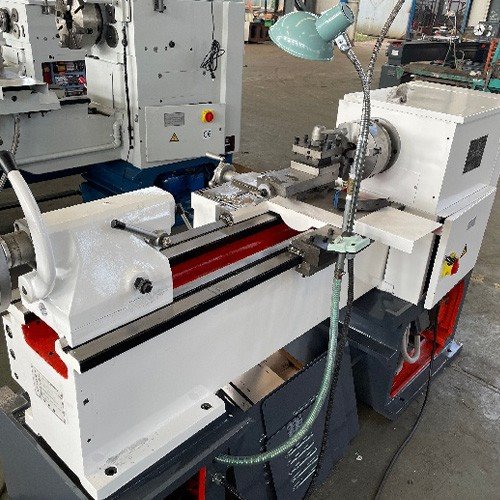
First off, why is adjusting the cutting angle so important? Well, the right cutting angle can improve the surface finish of your workpiece, reduce tool wear, and increase the efficiency of the cutting process. On the other hand, an incorrect angle can lead to poor finishes, excessive tool wear, and even damage to the workpiece. So, getting it right is definitely worth the effort.
Let's start with understanding the basic cutting angles. There are three main angles to consider: the rake angle, the clearance angle, and the cutting edge angle.
The rake angle is the angle between the face of the cutting tool and a line perpendicular to the workpiece surface. A positive rake angle makes the cut easier and reduces cutting forces, but it can also make the tool more prone to chipping. A negative rake angle, on the other hand, increases the tool's strength but requires more cutting force. The choice of rake angle depends on the material being cut and the type of operation. For example, when cutting soft materials like aluminum, a positive rake angle works well. But for harder materials like steel, a negative or zero rake angle might be more appropriate.
The clearance angle is the angle between the flank of the cutting tool and the workpiece surface. This angle prevents the tool from rubbing against the workpiece, which can cause heat and poor surface finish. A proper clearance angle allows the tool to cut smoothly without interference. Generally, a clearance angle of 5 - 15 degrees is common, but it can vary depending on the specific application.
The cutting edge angle is the angle between the cutting edge of the tool and the direction of feed. This angle affects the chip formation and the surface finish. A smaller cutting edge angle can produce a thinner chip, which is good for finishing operations. A larger cutting edge angle, on the other hand, is better for roughing operations as it can handle larger depths of cut.
Now, let's talk about how to adjust these angles on a traditional lathe. The first step is to select the right tool for the job. Different tools have different geometries, and choosing the appropriate one for the material and operation is essential. For example, a high - speed steel tool might be suitable for general - purpose turning, while a carbide tool is better for high - speed cutting of hard materials.
Once you have the right tool, it's time to mount it on the tool post. Make sure the tool is securely fastened and that its height is adjusted to the center of the workpiece. This can usually be done using shims under the tool post if necessary.
To adjust the rake angle, you can use the tool holder. Some tool holders have adjustable features that allow you to set the rake angle precisely. If your tool holder doesn't have this feature, you may need to grind the tool to achieve the desired rake angle. Grinding a cutting tool requires skill and the right equipment, so if you're not experienced, it might be a good idea to get some training or have a professional do it for you.
Adjusting the clearance angle is similar. You can use the tool holder to set the clearance angle, or you may need to grind the tool. When grinding the tool for the clearance angle, be careful not to grind too much, as this can weaken the tool.
For the cutting edge angle, you can use a tool grinder to shape the cutting edge. You can also use a compound rest on the lathe to set the angle of the tool relative to the feed direction. By rotating the compound rest, you can change the cutting edge angle. Make sure to lock the compound rest in place once you've set the desired angle.
When making adjustments, it's always a good idea to take small steps. Make a small adjustment, take a test cut, and evaluate the results. You can check the surface finish of the workpiece, the chip formation, and the amount of cutting force required. Based on these observations, you can make further adjustments if needed.
It's also important to keep in mind that the cutting conditions, such as the cutting speed, feed rate, and depth of cut, can interact with the cutting angles. For example, a higher cutting speed might require a different set of cutting angles compared to a lower cutting speed. So, you may need to experiment and find the optimal combination for your specific application.
As a Traditional Lathe supplier, I've seen firsthand how the right cutting angles can make a huge difference in the performance of a lathe. That's why we offer a wide range of high - quality lathes, including Heavy Lathe Machine and Heavy Lathe, which are designed to handle various cutting tasks with precision. Our Traditional Lathe models are known for their durability and ease of use, making them a great choice for both beginners and experienced machinists.
If you're looking to upgrade your lathe or find the right tools and accessories for adjusting cutting angles, we're here to help. Our team of experts can provide you with detailed guidance and support to ensure you get the most out of your lathe. Whether you're working on small - scale projects or large - scale industrial operations, we have the solutions you need.
So, if you're interested in purchasing a lathe or have any questions about cutting angle adjustment, don't hesitate to reach out. We're always happy to have a chat and discuss your specific requirements. Contact us today, and let's start making your machining projects more successful!
References:
- "Machinery's Handbook"
- "Manufacturing Engineering and Technology" by Serope Kalpakjian and Steven R. Schmid
- Various industry - specific technical manuals and guides


