


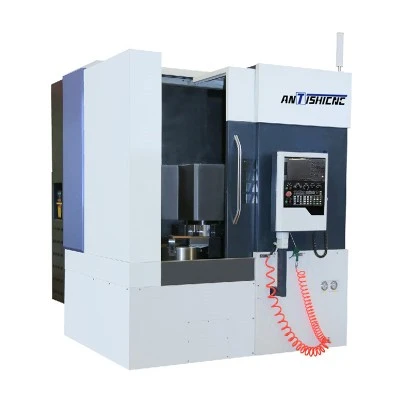
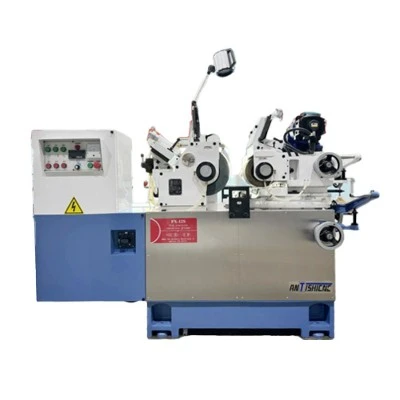
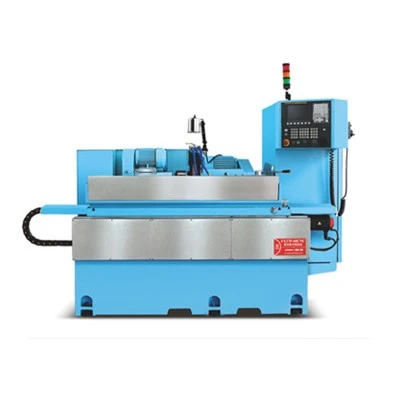
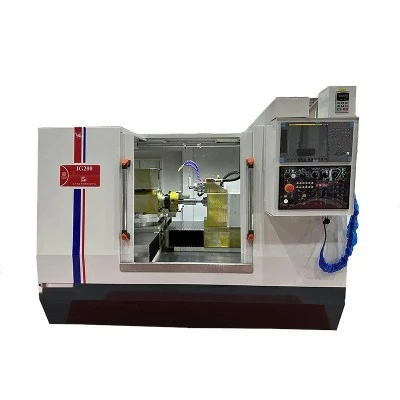

Hey there! As a supplier of large lathe machines, I often get asked about how to calculate the threading parameters on these beasts. It's a crucial skill, especially if you're looking to get the most out of your heavy - duty equipment. So, let's dive right in and break down the process step by step.
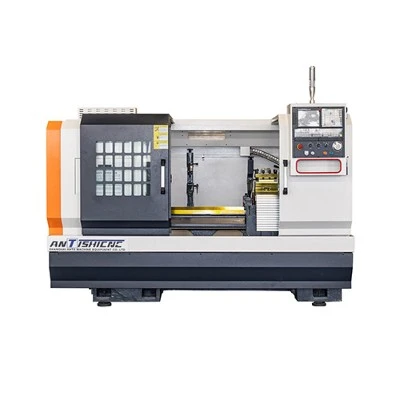
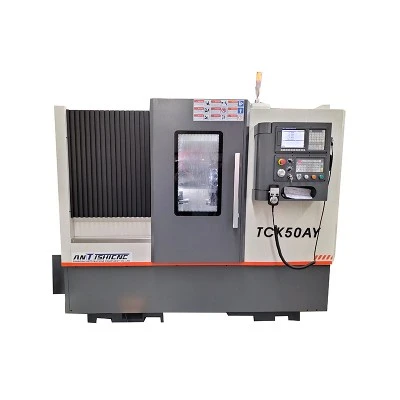
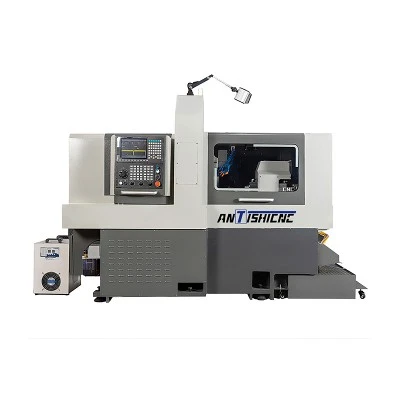
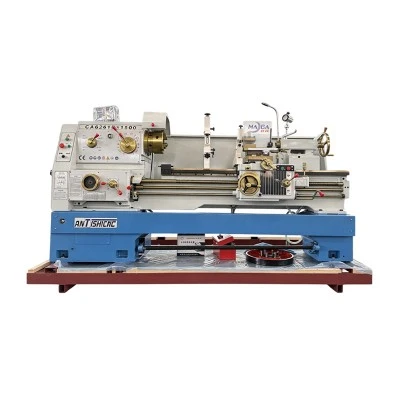
First off, let's understand what threading on a large lathe machine is all about. Threading is the process of creating helical grooves on a workpiece, which can be used for various applications like fastening parts together or for precise mechanical movements. When dealing with large lathe machines such as Heavy Lathe, Traditional Lathe, and Heavy Duty Metal Lathe, the calculations need to be spot - on to ensure a high - quality thread.
Understanding the Basics
The first thing you need to know is the pitch of the thread. The pitch is the distance between two adjacent threads, measured parallel to the axis of the workpiece. It's usually denoted by the letter 'P'. For example, if you're making a thread with a pitch of 2mm, that means there's a 2mm gap between each thread.
To calculate the pitch, you can use the following formula if you know the number of threads per inch (TPI). The conversion formula between pitch and TPI is (P=\frac{25.4}{TPI}) (since 1 inch is equal to 25.4mm). So, if you have a thread with 8 TPI, then (P = \frac{25.4}{8}=3.175)mm.
Depth of the Thread
The depth of the thread is another important parameter. It determines how deep the grooves will be cut into the workpiece. For a standard V - shaped thread, the depth of the thread ((h)) can be calculated using the formula (h = 0.6495P). This formula is based on the geometry of a 60 - degree V - thread, which is one of the most common thread forms.
Let's say we have a pitch of 3mm. Using the formula, the depth of the thread would be (h=0.6495\times3 = 1.9485)mm. Keep in mind that this is an ideal value, and in real - world applications, you might need to make some adjustments based on the material of the workpiece and the cutting tools you're using.
Outside Diameter and Minor Diameter
The outside diameter ((D)) of the thread is the largest diameter of the threaded part. This is usually the diameter of the workpiece before you start cutting the threads. The minor diameter ((d)) is the smallest diameter of the threaded part, which is measured at the bottom of the thread grooves.
The relationship between the outside diameter, pitch, and minor diameter for a standard V - thread is (d = D - 1.3P). For example, if you have a workpiece with an outside diameter of 20mm and a pitch of 2mm, then the minor diameter would be (d=20 - 1.3\times2=20 - 2.6 = 17.4)mm.
Lead of the Thread
The lead of the thread is the distance the nut moves along the screw in one complete revolution. For a single - start thread, the lead is equal to the pitch. But for multi - start threads, the lead ((L)) is calculated by multiplying the pitch by the number of starts ((n)). So, (L = nP). For instance, if you have a double - start thread ((n = 2)) with a pitch of 3mm, the lead would be (L=2\times3 = 6)mm.
Cutting Speed and Feed Rate
When cutting threads on a large lathe machine, you also need to consider the cutting speed and feed rate. The cutting speed ((V)) is the speed at which the cutting tool moves relative to the workpiece, usually measured in meters per minute (m/min). It depends on the material of the workpiece and the cutting tool.
A general rule of thumb is that for mild steel, the cutting speed can be around 30 - 60 m/min, while for stainless steel, it might be around 15 - 30 m/min. To calculate the rotational speed ((N)) of the workpiece in revolutions per minute (RPM), you can use the formula (N=\frac{1000V}{\pi D}), where (D) is the outside diameter of the workpiece.
The feed rate is the distance the cutting tool advances along the workpiece in one revolution. For threading, the feed rate is usually equal to the pitch of the thread. So, if you have a pitch of 2mm, the feed rate should be set to 2mm per revolution.
Using the Lathe's Gearbox
Most large lathe machines have a gearbox that allows you to change the speed and feed rate. To set up the lathe for threading, you need to select the appropriate gears based on the pitch of the thread you want to cut. The gear ratios in the lathe's gearbox are designed to provide different feed rates and spindle speeds.
You'll usually find a gear chart on the lathe that shows which gears to use for different thread pitches. It might take a bit of trial and error to get the hang of it, but once you understand how the gearbox works, it becomes much easier to set up the lathe for threading.
Material Considerations
The material of the workpiece also plays a big role in threading calculations. Different materials have different machining properties, such as hardness, ductility, and thermal conductivity. For example, cutting threads on a hard material like titanium will require different cutting speeds and feed rates compared to a softer material like aluminum.
When working with hard materials, you'll need to use a lower cutting speed and a smaller feed rate to avoid excessive tool wear and to ensure a good - quality thread. On the other hand, softer materials can usually be machined at higher speeds and feed rates.


Tool Selection
The type of cutting tool you use is also crucial. For threading on a large lathe machine, you'll typically use a threading tool. There are different types of threading tools, such as single - point threading tools and multi - point threading tools.
Single - point threading tools are more versatile and can be used to cut different thread forms. They require more skill to use but can produce high - quality threads. Multi - point threading tools, on the other hand, are faster but are usually limited to specific thread forms.
Checking and Adjusting
Once you've set up the lathe and started cutting the threads, it's important to check the quality of the threads regularly. You can use a thread gauge to measure the pitch and the thread form. If the threads are not up to the required specifications, you might need to make some adjustments to the cutting speed, feed rate, or the depth of the cut.
Conclusion
Calculating the threading parameters on a large lathe machine is a combination of understanding the basic formulas, considering the material of the workpiece, and using the right cutting tools and settings on the lathe. It might seem a bit complicated at first, but with practice, you'll be able to calculate and cut high - quality threads with ease.
If you're in the market for a large lathe machine or have any questions about threading calculations, don't hesitate to reach out. We're here to help you get the most out of your machining operations. Whether you need a Heavy Lathe, Traditional Lathe, or Heavy Duty Metal Lathe, we've got you covered. Contact us today to start a discussion about your needs!
References
- "Machining Fundamentals" by John T. Black
- "Modern Machining Technology" by Robert L. Norton


