


As a supplier of CNC turning machines, I've witnessed firsthand the unique challenges that come with machining titanium on these advanced tools. Titanium is a remarkable metal, known for its high strength-to-weight ratio, excellent corrosion resistance, and biocompatibility. These properties make it a popular choice in industries such as aerospace, medical, and automotive. However, these same characteristics also present significant hurdles when it comes to machining titanium on a CNC turning machine.
High Cutting Forces and Tool Wear
One of the primary challenges of machining titanium on a CNC turning machine is the high cutting forces involved. Titanium has a low thermal conductivity, which means that heat generated during the cutting process is not easily dissipated. As a result, the cutting tool is subjected to high temperatures, leading to increased cutting forces and rapid tool wear. This can significantly reduce the tool life and increase the cost of machining.
To mitigate these issues, it is essential to use cutting tools specifically designed for machining titanium. These tools are typically made from high-performance materials such as carbide or ceramic, which can withstand the high temperatures and cutting forces. Additionally, the cutting parameters, such as cutting speed, feed rate, and depth of cut, need to be carefully optimized to minimize tool wear and maximize productivity.
Chip Formation and Evacuation
Another significant challenge in machining titanium on a CNC turning machine is chip formation and evacuation. Titanium chips tend to be long and stringy, which can easily wrap around the cutting tool and cause damage. Moreover, the high temperatures generated during the cutting process can cause the chips to weld to the tool, further exacerbating the problem.
Proper chip control is crucial to ensure smooth machining operations. This can be achieved by using special cutting tools with chip breakers, which help to break the long chips into smaller, more manageable pieces. Additionally, the use of an effective coolant system is essential to remove the chips from the cutting zone and prevent them from building up on the tool.
Workpiece Surface Finish
Achieving a good surface finish on titanium workpieces is also a challenge when machining on a CNC turning machine. The high cutting forces and temperature fluctuations can cause surface irregularities, such as chatter marks and built-up edge. These surface defects not only affect the aesthetic appearance of the workpiece but also its functionality and performance.
To improve the surface finish, it is important to use sharp cutting tools and optimize the cutting parameters. A lower cutting speed and feed rate can help to reduce the cutting forces and minimize the formation of surface defects. Additionally, the use of a high-quality coolant can help to lubricate the cutting process and improve the surface finish.
Material Hardening and Residual Stresses
Titanium has a tendency to work harden during machining, which can make it more difficult to cut and increase the risk of tool breakage. The high cutting forces and heat generated during the machining process can cause the material to harden in the cutting zone, leading to increased wear on the cutting tool.
Furthermore, the machining process can introduce residual stresses into the workpiece, which can affect its dimensional stability and performance. These residual stresses can cause the workpiece to deform or crack over time, especially in applications where the component is subjected to high loads or stress.
To minimize material hardening and residual stresses, it is important to use appropriate cutting parameters and avoid excessive cutting forces. Additionally, the use of a post-machining heat treatment can help to relieve the residual stresses and improve the material properties of the workpiece.
Machine Rigidity and Stability
Machining titanium on a CNC turning machine requires a machine with high rigidity and stability. The high cutting forces involved in machining titanium can cause the machine to vibrate, which can lead to poor surface finish, tool wear, and dimensional inaccuracies.
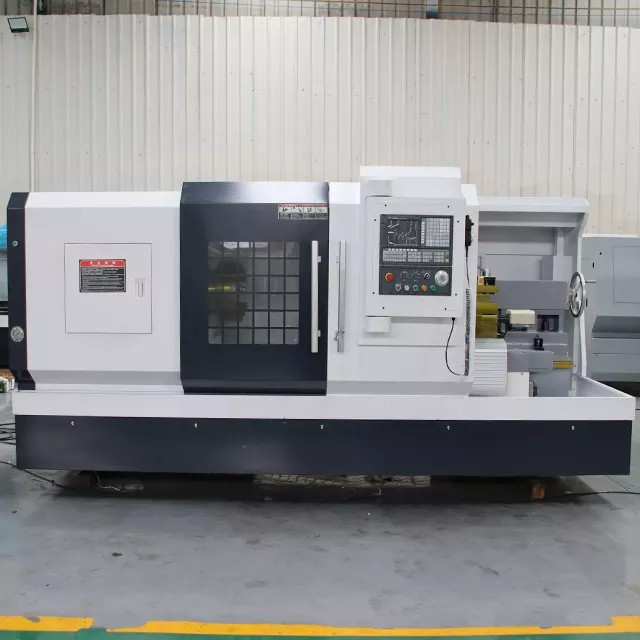
To ensure the machine's rigidity and stability, it is important to choose a CNC turning machine with a robust design and high-quality components. Flat Bed Lathe Machine and Horizontal Slant Bed Lathe are two types of CNC turning machines that are known for their rigidity and stability. These machines are designed to withstand the high cutting forces and vibrations associated with machining titanium.
In addition to the machine's design, proper maintenance and calibration are also essential to ensure its performance and accuracy. Regularly checking and adjusting the machine's alignment, lubrication, and coolant systems can help to prevent issues and ensure consistent machining results.

Operator Skill and Experience
Finally, machining titanium on a CNC turning machine requires a high level of operator skill and experience. The unique properties of titanium and the challenges associated with machining it require operators to have a deep understanding of the material and the machining process.
Operators need to be able to select the appropriate cutting tools, optimize the cutting parameters, and monitor the machining process to ensure quality and productivity. Additionally, they need to be able to troubleshoot and resolve any issues that may arise during the machining process, such as tool wear, chip formation, and surface finish problems.
To ensure the success of machining titanium on a CNC turning machine, it is important to provide operators with comprehensive training and support. This can include training on the machine's operation, programming, and maintenance, as well as training on the specific challenges and techniques associated with machining titanium.
Conclusion
Machining titanium on a CNC turning machine presents a number of challenges, including high cutting forces, tool wear, chip formation and evacuation, workpiece surface finish, material hardening, residual stresses, machine rigidity and stability, and operator skill and experience. However, with the right tools, techniques, and equipment, these challenges can be overcome.
As a supplier of CNC turning machines, we understand the importance of providing our customers with the solutions they need to machine titanium effectively. Our Flat Bed Lathe Machine, Horizontal Slant Bed Lathe, and Slant Bed CNC are designed to meet the demands of machining titanium and other difficult-to-machine materials.
If you are facing challenges in machining titanium on your CNC turning machine, or if you are looking to upgrade your machining capabilities, we encourage you to contact us. Our team of experts is ready to assist you in finding the right solution for your needs. We can provide you with detailed information about our products, offer technical support, and help you optimize your machining processes.
References
- "Machining of Titanium Alloys: An Overview" by S. Krishna Marimuthu, P. Arockiaraj, and R. L. Vijayaraghavan
- "CNC Machining Handbook" by Mark Jones
- "Titanium: Properties, Processing, and Applications" by Yutaka Yamabe-Mitarai and Kazuaki Matsunaga


