


In the realm of modern manufacturing, horizontal CNC lathes have become a staple for precision machining. One crucial aspect of these machines that often goes unnoticed but plays a vital role in their operation is the chip management system. As a supplier of Horizontal CNC Lathes, I've seen firsthand how a well - designed chip management system can significantly enhance the performance and longevity of the machine. So, what exactly is the chip management system in a horizontal CNC lathe? Let's dive in.
What are chips in CNC turning?
Before we talk about the management system, we should understand what chips are. When a horizontal CNC lathe is cutting a workpiece, the cutting tool removes material from it. This removed material comes off in small pieces, and these are what we call chips. The shape, size, and type of chips produced depend on several factors, such as the material of the workpiece, the cutting speed, and the geometry of the cutting tool.
Why is chip management important?
Chips might seem like just a by - product of the machining process, but they can cause a lot of problems if not managed properly. First off, if chips accumulate around the cutting area, they can interfere with the cutting process. They can get in the way of the cutting tool, causing it to wear out faster or even break. This not only increases the cost of tool replacement but can also lead to poor surface finish on the workpiece.
Secondly, chips can cause damage to the machine itself. They can get into the moving parts of the lathe, such as the guideways and ball screws, leading to increased friction and wear. Over time, this can affect the accuracy and performance of the machine. Moreover, chips that are not removed promptly can generate heat, which can cause thermal deformation of the workpiece and the machine components.
Components of a chip management system
A typical chip management system in a horizontal CNC lathe consists of several key components.
Chip conveyor
The chip conveyor is the workhorse of the chip management system. It's responsible for removing the chips from the cutting area and transporting them to a collection point. There are different types of chip conveyors, including chain conveyors, screw conveyors, and belt conveyors. Chain conveyors are robust and can handle heavy - duty chips, while screw conveyors are more suitable for small and light chips. Belt conveyors are often used when a smooth and quiet operation is required.
Chip breaker
A chip breaker is a device that is designed to break the chips into smaller, more manageable pieces. It's usually integrated into the cutting tool or can be a separate attachment. By breaking the chips, it becomes easier for the chip conveyor to remove them from the cutting area. Different materials and cutting conditions require different types of chip breakers. For example, for soft materials like aluminum, a simple groove - type chip breaker might work well, while for hard materials like steel, a more complex chip - breaking geometry is needed.
Coolant system
The coolant system also plays a crucial role in chip management. Coolant helps to lubricate the cutting tool, reducing friction and heat generation. This, in turn, affects the formation of chips. A well - designed coolant system can also flush the chips away from the cutting area, making it easier for the chip conveyor to do its job. There are different types of coolants, such as water - based coolants and oil - based coolants. Water - based coolants are more environmentally friendly and cost - effective, while oil - based coolants offer better lubrication and corrosion protection.
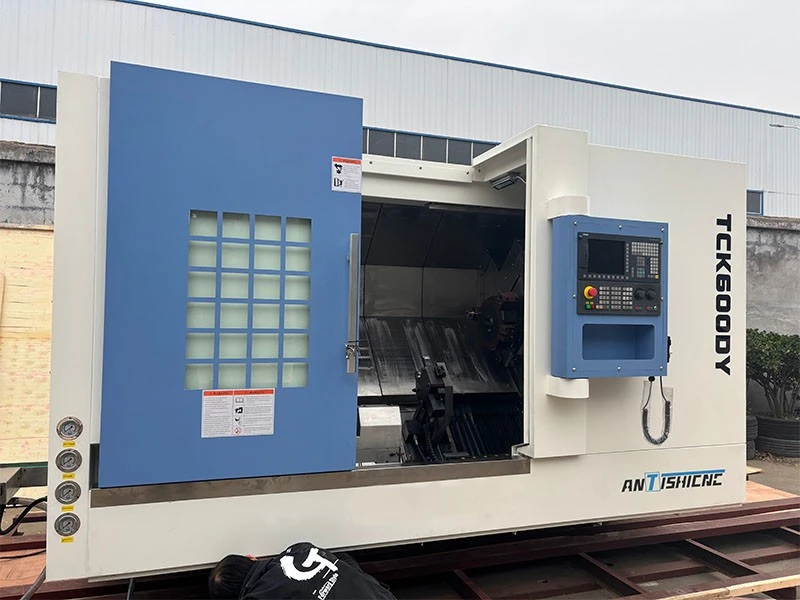

How different types of horizontal CNC lathes handle chips
As a supplier, we offer various types of horizontal CNC lathes, and each type has its own way of handling chips.
Slant Bed CNC Lathe Machine
The Slant Bed CNC Lathe Machine has a slanted bed design, which allows chips to fall more easily into the chip conveyor. The slant angle of the bed helps in the natural flow of chips due to gravity. This design is particularly effective for high - volume machining operations, as it reduces the chances of chip accumulation around the cutting area. The chip conveyor in a slant bed lathe is usually located at the lower end of the slant, making it easier to collect and transport the chips.
4 Axis Cnc Lathe
The 4 Axis Cnc Lathe offers more flexibility in machining complex parts. However, this also means that the chip management can be a bit more challenging. These lathes often have multiple cutting tools working simultaneously, which can generate a large amount of chips. To handle this, they are equipped with more advanced chip management systems. For example, they might have multiple chip conveyors or a more powerful coolant system to ensure that chips are removed efficiently from all cutting areas.
Flat Bed CNC Lathe Machine
The Flat Bed CNC Lathe Machine has a flat bed design, which can sometimes make chip removal a bit more difficult compared to slant bed lathes. However, modern flat - bed lathes are designed with effective chip management in mind. They usually have well - placed chip conveyors and coolant nozzles to ensure that chips are removed from the cutting area. Some flat - bed lathes also have a chip flushing system that uses high - pressure coolant to push the chips towards the conveyor.
Maintenance of the chip management system
To ensure the proper functioning of the chip management system in a horizontal CNC lathe, regular maintenance is essential. This includes cleaning the chip conveyor regularly to remove any accumulated chips or debris. The coolant system should also be checked and maintained, including changing the coolant at regular intervals and cleaning the coolant tank to prevent the growth of bacteria.
The chip breaker should be inspected for wear and replaced if necessary. A worn - out chip breaker can lead to long, unbroken chips that are difficult to manage. Additionally, the guideways and other moving parts of the machine should be kept clean to prevent chips from getting into them.
Conclusion
The chip management system in a horizontal CNC lathe is a critical component that affects the performance, accuracy, and longevity of the machine. As a supplier, we understand the importance of providing high - quality chip management solutions with our lathes. Whether you're looking for a Slant Bed CNC Lathe Machine, a 4 Axis Cnc Lathe, or a Flat Bed CNC Lathe Machine, we've got you covered.
If you're in the market for a horizontal CNC lathe and want to learn more about our products and how our chip management systems can benefit your machining operations, don't hesitate to reach out. We're here to help you make an informed decision and find the perfect machine for your needs.
References
- "CNC Machining Handbook"
- "Modern Manufacturing Technology"
- Industry whitepapers on horizontal CNC lathe design and operation


