


As a supplier of large lathe machines, I often encounter inquiries from customers about the various components and their functions. One such crucial component that plays a significant role in the operation of a large lathe machine is the tailstock. In this blog, I will delve into the details of the tailstock function of a large lathe machine, shedding light on its importance and how it contributes to the overall machining process.
Understanding the Tailstock
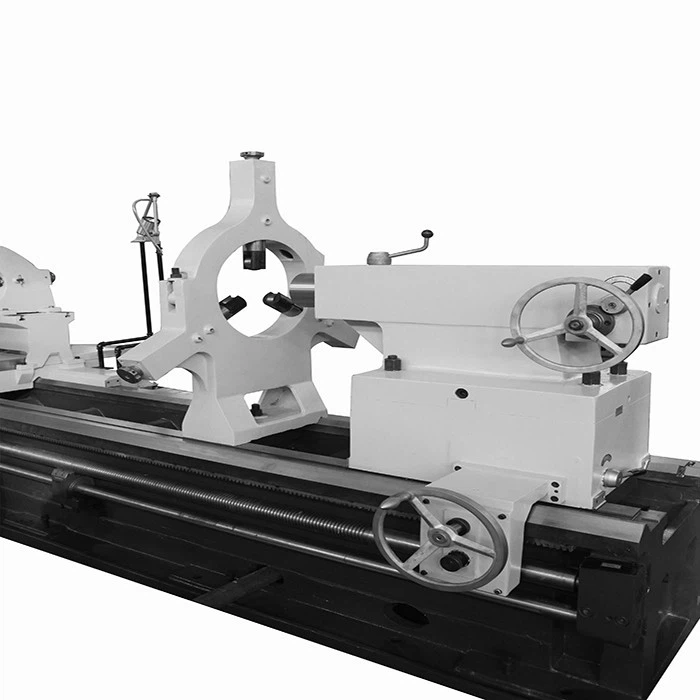
The tailstock, also known as the dead center, is a vital part of a lathe machine. It is located at the opposite end of the headstock on the lathe bed. The primary function of the tailstock is to support the free end of a workpiece during the turning process. This support is essential, especially when dealing with long or slender workpieces, as it helps prevent deflection and ensures accurate machining.
Key Functions of the Tailstock
1. Workpiece Support
One of the most fundamental functions of the tailstock is to provide support to the workpiece. When a long workpiece is being turned on a lathe, the weight of the workpiece can cause it to bend or deflect under the cutting forces. By using the tailstock to support the free end of the workpiece, this deflection can be minimized, resulting in a more accurate and precise machining operation. For example, when machining a long shaft, the tailstock can hold the end of the shaft firmly, allowing the cutting tool to make smooth and consistent cuts along the length of the shaft.
2. Drilling and Reaming
The tailstock can also be used for drilling and reaming operations. A drill bit or reamer can be mounted in the tailstock quill, which can then be advanced towards the workpiece. This allows for holes to be drilled or reamed accurately in the center of the workpiece. The tailstock provides a stable and rigid platform for these operations, ensuring that the holes are drilled straight and to the correct depth. For instance, in the manufacturing of engine components, the tailstock can be used to drill precision holes in the shafts or cylinders.
3. Taper Turning
In some cases, the tailstock can be offset to facilitate taper turning. By moving the tailstock laterally relative to the headstock, a taper can be created on the workpiece. This is a useful technique for producing parts with tapered shapes, such as cones or tapered shafts. The ability to create tapers accurately is essential in many industries, including automotive and aerospace.
Types of Tailstocks
There are different types of tailstocks available, each designed to meet specific machining requirements. Some common types include:
1. Fixed Tailstock
A fixed tailstock is the simplest type of tailstock. It is rigidly mounted on the lathe bed and cannot be moved during the machining process. Fixed tailstocks are typically used for applications where the workpiece does not require frequent adjustment or where the machining operation is relatively straightforward.
2. Adjustable Tailstock
An adjustable tailstock can be moved along the lathe bed to accommodate workpieces of different lengths. It also allows for fine adjustments in the position of the tailstock quill, providing greater flexibility in the machining process. Adjustable tailstocks are commonly used in general-purpose machining applications.
3. Live Tailstock
A live tailstock, also known as a rotating tailstock, has a spindle that can rotate. This is particularly useful when machining workpieces that require continuous rotation, such as long shafts or cylinders. The live tailstock reduces friction and wear on the workpiece, resulting in a smoother and more efficient machining operation.
Importance of the Tailstock in Large Lathe Machines
In large lathe machines, the role of the tailstock becomes even more critical. Large workpieces are often heavier and more difficult to handle, and the cutting forces involved in machining these workpieces are also greater. The tailstock provides the necessary support and stability to ensure that the machining process is carried out safely and accurately.
For example, in the manufacturing of large industrial components, such as turbine shafts or large gears, the tailstock is essential for maintaining the integrity of the workpiece during machining. Without proper support from the tailstock, these large workpieces could easily deform or become damaged, leading to costly rework or scrap.
Our Large Lathe Machine Offerings
As a supplier of large lathe machines, we offer a wide range of products to meet the diverse needs of our customers. Our Heavy Lathe Machine is designed for heavy-duty machining applications, with a robust tailstock that provides excellent support for large and heavy workpieces. The Parrallel Lathe Machine is ideal for precision machining operations, with a highly adjustable tailstock that allows for accurate positioning and support. And our 7 Feet Lathe Machine is a versatile machine that can handle a variety of workpiece sizes, with a reliable tailstock that ensures consistent performance.

Conclusion
In conclusion, the tailstock is a crucial component of a large lathe machine. Its functions, including workpiece support, drilling and reaming, and taper turning, are essential for achieving accurate and precise machining results. By understanding the role of the tailstock and choosing the right lathe machine with a suitable tailstock, manufacturers can improve the quality and efficiency of their machining operations.
If you are interested in learning more about our large lathe machines or have any questions about the tailstock function, please feel free to contact us. We are always happy to assist you with your machining needs and help you find the right solution for your business.
References
- "Machinery's Handbook" by Industrial Press Inc.
- "Modern Machining Technology" by Robert L. Novak


