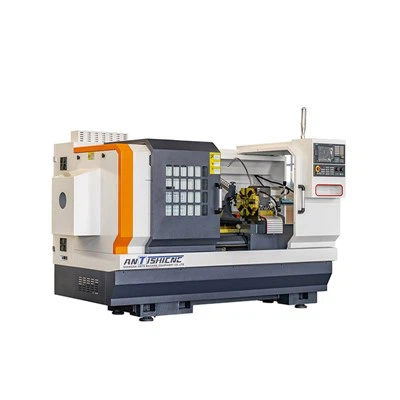
The tailstock of a universal lathe is a crucial component that plays a significant role in various machining operations. As a leading supplier of Universal Lathe, we understand the importance of this part and its applications. In this blog, we will explore the functions and uses of the tailstock in a universal lathe.
Understanding the Tailstock
The tailstock is located at the opposite end of the headstock on a universal lathe. It is designed to support the free end of a workpiece during machining operations. The main body of the tailstock can be moved along the bed of the lathe to accommodate workpieces of different lengths. It consists of several key parts, including the barrel, handwheel, and clamping mechanism.

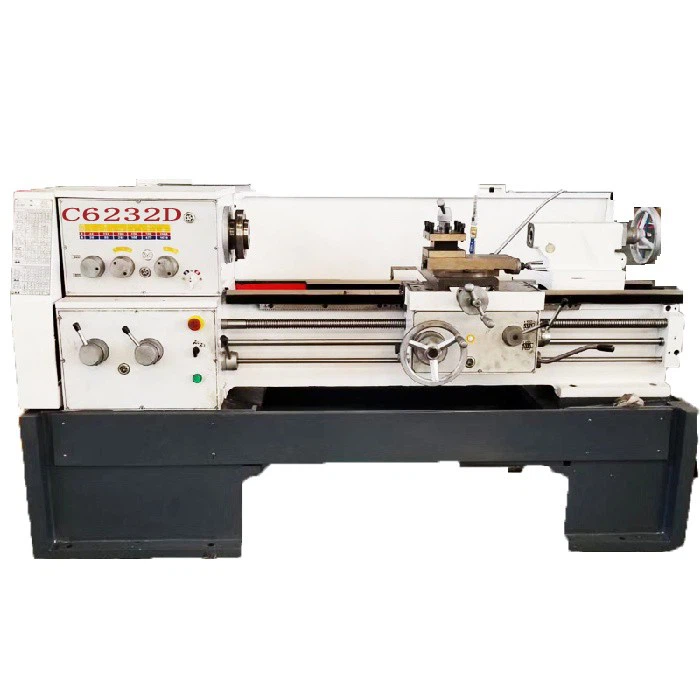
The barrel is the movable part of the tailstock that can be extended or retracted. It holds the center or other tools used to support the workpiece. The handwheel is used to control the movement of the barrel, allowing for precise adjustments. The clamping mechanism is used to secure the tailstock in place once it has been positioned correctly.
Primary Functions of the Tailstock
1. Workpiece Support
One of the primary functions of the tailstock is to provide support for the workpiece. When machining long or slender workpieces, the tailstock helps to prevent deflection and vibration, which can lead to poor surface finish and inaccurate dimensions. By supporting the free end of the workpiece, the tailstock ensures that it remains stable during the machining process.
For example, when turning a long shaft, the headstock rotates the workpiece while the cutting tool removes material from the surface. Without the support of the tailstock, the shaft may bend or vibrate, causing the cutting tool to produce an uneven surface. By using the tailstock to support the free end of the shaft, the machining operation can be carried out more accurately and efficiently.
2. Center Drilling
The tailstock can also be used for center drilling operations. Center drilling is the process of creating a small hole at the end of a workpiece to provide a starting point for subsequent drilling or turning operations. To perform center drilling, a center drill is mounted in the barrel of the tailstock. The workpiece is then rotated by the headstock, and the center drill is fed into the end of the workpiece using the handwheel on the tailstock.
Center drilling is important because it helps to ensure that the subsequent drilling or turning operations are centered accurately. This is especially important when machining parts that require precise alignment, such as shafts or axles.
3. Drilling and Reaming
In addition to center drilling, the tailstock can be used for other drilling and reaming operations. To perform these operations, a drill bit or reamer is mounted in the barrel of the tailstock. The workpiece is rotated by the headstock, and the drill bit or reamer is fed into the workpiece using the handwheel on the tailstock.
Drilling and reaming operations can be used to create holes of various sizes and depths in the workpiece. These operations are commonly used in the manufacturing of parts such as engine blocks, gears, and bearings.
4. Taper Turning
The tailstock can also be used for taper turning operations. Taper turning is the process of machining a workpiece so that it has a tapered shape. To perform taper turning, the tailstock is offset from the centerline of the lathe. This causes the cutting tool to move at an angle relative to the workpiece, resulting in a tapered shape.
Taper turning is commonly used in the manufacturing of parts such as cones, spindles, and valves. By using the tailstock to offset the workpiece, the taper can be machined accurately and efficiently.
Additional Applications of the Tailstock
1. Using a Live Center
In some cases, a live center can be used in the tailstock instead of a dead center. A live center is a type of center that rotates with the workpiece, reducing friction and wear. This is especially useful when machining workpieces at high speeds or when the workpiece has a large diameter.
Using a live center in the tailstock can help to improve the surface finish of the workpiece and reduce the risk of damage to the center. It can also increase the efficiency of the machining process by allowing the workpiece to rotate more freely.
2. Mounting Special Tools
The tailstock can also be used to mount special tools, such as tapping heads or boring bars. These tools can be used to perform additional machining operations on the workpiece, such as threading or boring.
By mounting special tools in the tailstock, the versatility of the universal lathe can be increased. This allows for a wider range of machining operations to be performed on a single machine, reducing the need for multiple machines and increasing productivity.
Importance of Proper Tailstock Maintenance
To ensure the optimal performance of the tailstock, it is important to perform regular maintenance. This includes cleaning the tailstock, lubricating the moving parts, and checking the alignment and accuracy of the center.
Cleaning the tailstock helps to remove dirt, chips, and other debris that can accumulate over time. This can prevent damage to the moving parts and ensure smooth operation. Lubricating the moving parts, such as the barrel and handwheel, helps to reduce friction and wear, extending the life of the tailstock.
Checking the alignment and accuracy of the center is also important. If the center is not aligned correctly, it can cause the workpiece to be machined inaccurately. This can lead to poor surface finish and dimensional errors. By regularly checking the alignment and accuracy of the center, these problems can be detected and corrected before they cause significant damage.
Conclusion
In conclusion, the tailstock is an essential component of a universal lathe. It plays a crucial role in providing support for the workpiece, performing center drilling, drilling and reaming, and taper turning operations. By understanding the functions and uses of the tailstock, you can make the most of your universal lathe and achieve accurate and efficient machining results.
As a supplier of Universal Lathe, we offer a wide range of high-quality lathes and accessories, including Universal Lathe Stand and Large Lathe Machine. Our products are designed to meet the needs of various industries and applications. If you are interested in purchasing a universal lathe or need more information about our products, please contact us for a detailed consultation and procurement discussion.
References
- "Machining Fundamentals" by John A. Schey
- "Modern Manufacturing Processes" by Ghosh A. and Mallik A. K.
- "Manufacturing Engineering and Technology" by S. Kalpakjian and S. R. Schmid