


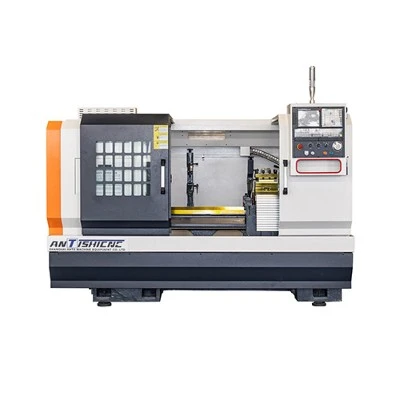

Hey there! As a supplier of Flatbed CNC machines, I often get asked about the stiffness of a Flatbed CNC's structure. It's a crucial factor that can significantly impact the performance and quality of machining operations. So, let's dive right in and explore what stiffness means in the context of Flatbed CNC machines.


First off, what exactly is stiffness? In simple terms, stiffness refers to the ability of a structure to resist deformation when subjected to external forces. When it comes to a Flatbed CNC machine, this means that the machine should be able to maintain its shape and position accurately, even when cutting, drilling, or milling materials. A stiff structure ensures that the cutting tool moves precisely along the programmed path, resulting in high - quality finished products with tight tolerances.
One of the main reasons why stiffness is so important in a Flatbed CNC is the nature of the machining process. When the cutting tool comes into contact with the workpiece, it exerts a significant amount of force. If the machine's structure isn't stiff enough, it can flex or vibrate. This vibration can lead to a rough surface finish on the workpiece, inaccuracies in dimensions, and even premature wear of the cutting tool. For example, in precision machining where tolerances are measured in micrometers, even the slightest vibration can ruin the entire part.
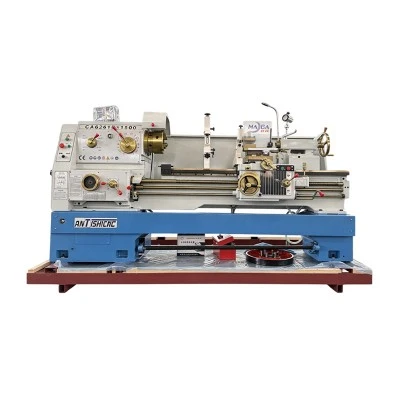
Now, let's talk about the components that contribute to the stiffness of a Flatbed CNC's structure. The bed of the machine is a key element. It provides the foundation for all the other moving parts. A thick and well - designed bed made of high - quality materials like cast iron can absorb and distribute the cutting forces evenly. Cast iron has excellent damping properties, which means it can reduce vibrations effectively. This helps in maintaining the stability of the machine during operation.
The column of the Flatbed CNC also plays a vital role. It supports the spindle and other components. A rigid column ensures that the spindle remains in the correct position, allowing for accurate cutting. The way the column is attached to the bed is also crucial. A strong and secure connection between the column and the bed helps in transferring the forces without causing any unwanted movement.
Another important aspect is the guideways. The guideways are responsible for guiding the movement of the carriage and the cross - slide. Linear guideways are commonly used in modern Flatbed CNC machines. They offer high precision and low friction. However, their stiffness depends on factors like the size, the number of rolling elements, and the pre - loading. A well - preloaded linear guideway can provide better stiffness and accuracy.
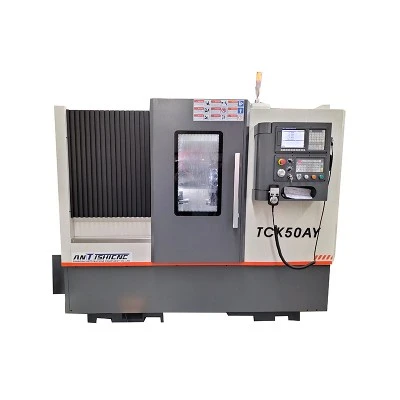
When comparing Flatbed CNC with other types of CNC lathes, such as the Horizontal Slant Bed Lathe, there are some differences in terms of stiffness. A slant bed lathe typically has a more compact design and may offer better chip evacuation. But a Flatbed CNC can have a more robust and stable structure, especially when it comes to heavy - duty machining. The flatbed design allows for a larger contact area between the moving parts and the bed, which can enhance the overall stiffness.
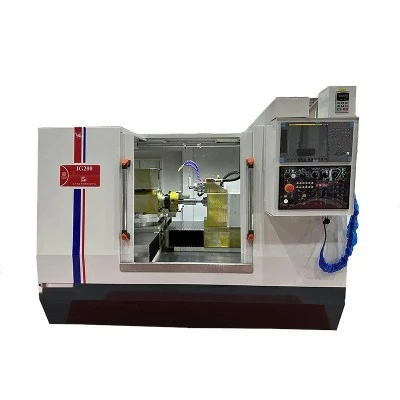
As a supplier, we take great care in designing and manufacturing our Flat Bed CNC Lathe Machine to ensure optimal stiffness. We use advanced simulation techniques during the design phase to analyze how the machine will respond to different cutting forces. This helps us in making adjustments to the design to improve the stiffness. We also conduct rigorous testing on each machine before it leaves the factory. We measure the vibration levels, the accuracy of movement, and the overall stability of the machine to ensure that it meets our high - quality standards.
If you're in the market for a Flatbed CNC machine, stiffness should be one of your top considerations. A machine with high stiffness will not only give you better - quality products but also save you money in the long run. You'll have fewer rejects, less tool wear, and lower maintenance costs.
So, if you're interested in learning more about our Flatbed CNC machines or have any questions regarding stiffness or other aspects of the machine, don't hesitate to reach out. We're always here to help you make the right choice for your machining needs. Whether you're a small - scale workshop or a large - scale manufacturing plant, we have the right Flatbed CNC solution for you. Let's start a conversation and see how we can work together to improve your machining operations.
References
- "CNC Machining Handbook" - A comprehensive guide on CNC machining principles and machine design.
- "Machine Tool Design and Manufacturing" - Covers the design aspects of various machine tools, including Flatbed CNCs.
- Industry research papers on the impact of machine stiffness on machining quality.


