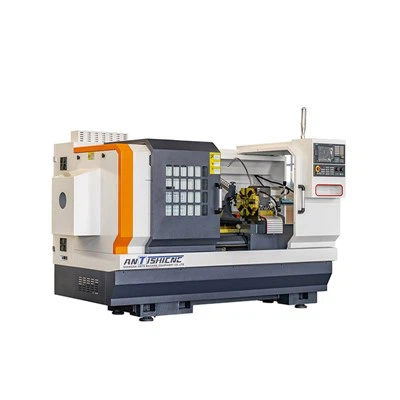
When it comes to traditional lathes, one of the most crucial components is the chuck. A chuck is a device used to hold the workpiece securely in place during machining operations. There are several types of chucks available for traditional lathes, each with its own unique features and applications. As a traditional lathe supplier, I'm here to provide you with an in - depth look at the different types of chucks you can consider for your machining needs.
1. Three - Jaw Chuck
The three - jaw chuck is one of the most commonly used chucks in traditional lathes. It is known for its self - centering feature, which means that when you tighten the jaws, the workpiece is automatically centered in the chuck. This makes it ideal for quickly and accurately gripping round, hexagonal, or other symmetrical workpieces.
The three - jaw chuck consists of three jaws that move simultaneously towards or away from the center of the chuck. These jaws are typically operated by a scroll mechanism, which is turned by a key. The scroll mechanism ensures that all three jaws move in unison, providing a balanced grip on the workpiece.

One of the main advantages of the three - jaw chuck is its speed and convenience. You can quickly load and unload workpieces, which is especially useful in high - volume production environments. However, it has some limitations. For example, it may not be suitable for irregularly shaped workpieces, as the self - centering feature may not be able to grip them effectively.
2. Four - Jaw Chuck
In contrast to the three - jaw chuck, the four - jaw chuck offers more flexibility. Each jaw on a four - jaw chuck can be adjusted independently, allowing you to grip irregularly shaped workpieces with precision. This makes it a great choice for machining non - symmetrical parts.
The four - jaw chuck is operated by four separate screws, one for each jaw. By adjusting these screws, you can position the jaws to fit the shape of the workpiece. This process requires more time and skill compared to using a three - jaw chuck, but it provides greater control over the gripping of the workpiece.
The four - jaw chuck is commonly used in applications where high accuracy is required, such as in the manufacturing of custom parts or in tool and die making. It can also be used to hold workpieces that are not perfectly round or have complex geometries.
3. Collet Chuck
Collet chucks are designed to provide a very precise and concentric grip on the workpiece. They work by using a collet, which is a sleeve - like device that contracts around the workpiece when tightened. Collets come in a variety of sizes and can be used to hold round, square, or hexagonal workpieces.
One of the key advantages of collet chucks is their high precision. They can hold workpieces with extremely tight tolerances, making them ideal for applications where accuracy is critical, such as in the production of small, high - precision parts. Collet chucks also offer quick changeover times, as you can easily swap out collets to accommodate different workpiece sizes.
However, collet chucks have a limited range of workpiece sizes that they can accommodate. Each collet is designed for a specific size range, so you may need to have multiple collets on hand to handle different workpieces.
4. Magnetic Chuck
Magnetic chucks are a unique type of chuck that uses magnetic force to hold the workpiece in place. They are particularly useful for holding ferrous materials, such as steel. Magnetic chucks come in two main types: permanent magnetic chucks and electromagnetic chucks.
Permanent magnetic chucks use permanent magnets to generate the magnetic field. They are simple in design and do not require an external power source. Once the workpiece is placed on the chuck, the magnetic field is activated, and the workpiece is held firmly in place.
Electromagnetic chucks, on the other hand, use an electric current to generate the magnetic field. They offer more control over the magnetic force and can be easily turned on and off. This makes them suitable for applications where you need to quickly release the workpiece.
Magnetic chucks are often used in grinding operations, as they provide a flat and stable surface for the workpiece. They can also be used in turning operations, especially when dealing with thin or flat workpieces.
5. Drill Chuck
A drill chuck is a specialized chuck that is primarily used for holding drill bits. It is commonly found on the tailstock of a traditional lathe. Drill chucks are designed to hold drill bits securely and allow for easy insertion and removal.
Drill chucks typically have three jaws that can be tightened around the drill bit. They are available in different sizes to accommodate various drill bit diameters. Some drill chucks are key - operated, while others are keyless, which allows for even faster bit changes.
Drill chucks are essential for performing drilling operations on a lathe. They ensure that the drill bit is held in place accurately, which is crucial for achieving precise holes in the workpiece.
Applications and Considerations
The choice of chuck depends on the specific application and the type of workpiece you are machining. For example, if you are working with round, symmetrical workpieces in a high - volume production environment, a three - jaw chuck may be the best choice. On the other hand, if you need to machine irregularly shaped parts with high precision, a four - jaw chuck or a collet chuck may be more suitable.
When selecting a chuck, you also need to consider factors such as the size of the workpiece, the required accuracy, and the type of machining operation. For example, if you are performing heavy - duty turning operations, you may need a chuck with a high clamping force.
As a traditional lathe supplier, we offer a wide range of chucks to meet your specific needs. Whether you are looking for a standard three - jaw chuck or a specialized collet chuck, we have the right solution for you.
In addition to chucks, we also provide a variety of traditional lathe machines, such as the Parrallel Lathe Machine, Large Lathe Machine, and Universal Lathe Stand. These machines are designed to work seamlessly with our chucks, ensuring optimal performance and productivity.
If you are interested in purchasing chucks or traditional lathe machines, we invite you to contact us for a detailed discussion. Our team of experts is ready to help you select the right products for your machining needs and provide you with the best possible solutions.
References
- "Machinery's Handbook", Industrial Press Inc.
- "Modern Machining Technology", McGraw - Hill Education