


As a provider of CNC Swiss lathes, I often get asked about the maximum length that these machines can handle. In this blog post, I'll delve into the factors that influence the maximum machining length of a CNC Swiss lathe, explore the typical ranges, and discuss how these capabilities can impact your manufacturing operations.
Understanding the Basics of CNC Swiss Lathes
Before we dive into the maximum machining length, let's briefly review what a CNC Swiss lathe is. A Swiss Type Lathe Machine is a precision turning machine that is particularly well - suited for high - precision, small - diameter parts. It uses a sliding headstock and a guide bushing to support the workpiece close to the cutting tool, which minimizes deflection and allows for extremely accurate machining.
The Swiss Style Lathe design has been around for over a century, originally developed for the watchmaking industry. Today, CNC technology has been integrated into Swiss lathes, enabling automated and highly efficient production. These machines are widely used in industries such as medical, aerospace, and electronics to produce complex parts with tight tolerances.
Factors Affecting the Maximum Machining Length
Several factors determine the maximum length that a CNC Lathe Swiss Type can machine.
1. Machine Design and Construction
The physical design of the lathe plays a crucial role. The length of the bed, the travel of the slides, and the overall structural integrity of the machine all limit how long a workpiece can be machined. A longer bed generally allows for longer workpieces, but it also requires a more robust construction to maintain accuracy during the machining process.
2. Guide Bushing
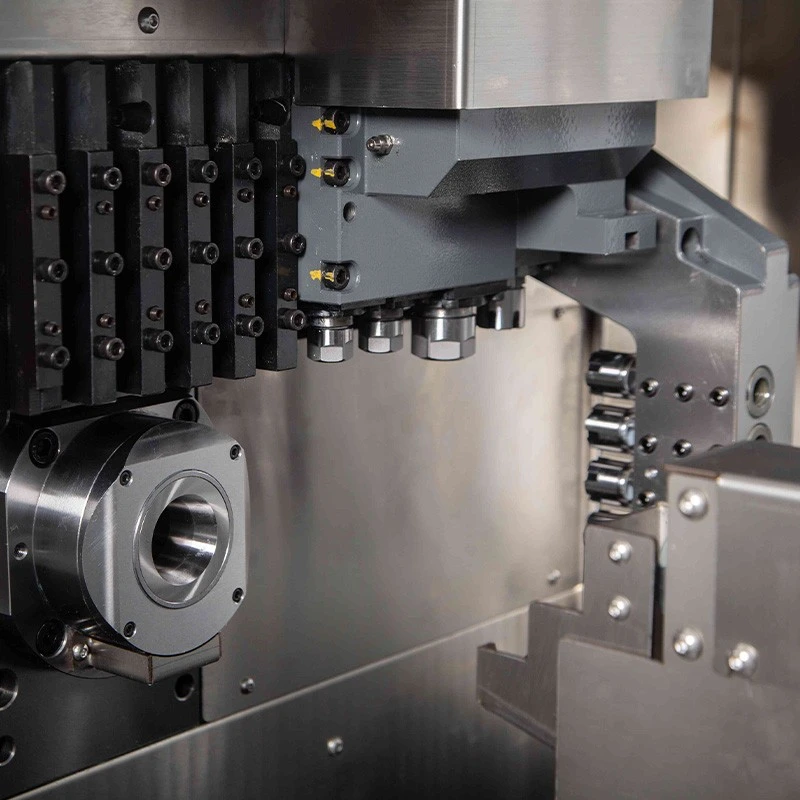
The guide bushing is a key component in a Swiss lathe. It supports the workpiece close to the cutting tool, reducing vibration and ensuring precise machining. The distance from the guide bushing to the cutting tool affects the maximum length of the workpiece that can be machined without excessive deflection. If the workpiece extends too far beyond the guide bushing, it may start to vibrate, leading to poor surface finish and dimensional inaccuracies.
3. Cutting Tools and Toolholders
The type and length of the cutting tools used also impact the maximum machining length. Longer tools can reach further along the workpiece, but they are more prone to vibration and deflection. Additionally, the toolholders need to be able to securely hold the tools during the machining process, especially when dealing with long workpieces.
4. Material Properties
The material of the workpiece affects the maximum machining length. Some materials are more prone to deflection and vibration than others. For example, soft materials like aluminum may allow for longer machining lengths compared to harder materials like stainless steel or titanium. The material's strength, ductility, and thermal properties all play a role in determining how long a workpiece can be machined without issues.
Typical Ranges of Maximum Machining Length
The maximum machining length of CNC Swiss lathes can vary widely depending on the model and manufacturer. Generally, most standard CNC Swiss lathes can machine workpieces with a length ranging from a few inches to around 12 inches (300 mm). However, there are also high - end models that can handle workpieces up to 20 inches (500 mm) or even longer in some cases.
For small - scale production and precision machining of short parts, lathes with a maximum machining length of 3 - 6 inches (75 - 150 mm) are often sufficient. These machines are compact and can be used for applications such as watch components, small medical devices, and electronic connectors.

On the other hand, for larger - scale production and parts that require longer machining lengths, machines with a maximum length of 12 - 20 inches (300 - 500 mm) are more suitable. These machines are commonly used in industries like aerospace and automotive, where longer shafts, pins, and other components need to be produced.
Impact on Manufacturing Operations
The maximum machining length of a CNC Swiss lathe can have a significant impact on your manufacturing operations.
1. Part Design
If you are designing parts, the maximum machining length of your lathe will limit the size of the parts you can produce. You may need to break down longer parts into smaller sections or consider alternative manufacturing processes if the part length exceeds the capabilities of your machine.
2. Production Efficiency
Using a lathe with an appropriate maximum machining length can improve production efficiency. If you try to machine a long part on a lathe with a limited length capacity, you may need to perform multiple setups, which can increase production time and the risk of errors. On the other hand, having a lathe with a longer maximum machining length allows you to machine longer parts in a single setup, reducing cycle times and improving overall productivity.
3. Cost
The cost of a CNC Swiss lathe is often related to its maximum machining length. Longer - capacity machines generally require more robust construction and advanced features, which can make them more expensive. When choosing a lathe, you need to balance the cost of the machine with your production requirements to ensure that you are getting the best value for your investment.
Choosing the Right CNC Swiss Lathe for Your Needs
When selecting a CNC Swiss lathe, it's important to consider your specific production requirements, including the maximum length of the parts you need to machine. Here are some tips to help you make the right choice:
1. Evaluate Your Part Requirements
Determine the maximum length of the parts you will be producing in the next few years. Consider any future growth or changes in your product line that may require longer machining lengths.
2. Research Different Models
Look at different models of CNC Swiss lathes from various manufacturers. Compare their maximum machining lengths, features, and prices to find the machine that best suits your needs and budget.
3. Consider the Machine's Capabilities
In addition to the maximum machining length, consider other capabilities of the machine, such as the number of axes, spindle speed, and tool capacity. These features can also impact the quality and efficiency of your production.
4. Seek Expert Advice
If you're unsure which machine is right for you, don't hesitate to seek advice from industry experts or our sales team. We can help you understand the capabilities of different machines and recommend the best option for your specific requirements.
Conclusion
The maximum length that a CNC Swiss lathe can machine is influenced by several factors, including machine design, guide bushing, cutting tools, and material properties. Typical ranges vary from a few inches to over 20 inches, depending on the model. Choosing the right CNC Swiss lathe with an appropriate maximum machining length is crucial for optimizing your manufacturing operations, improving production efficiency, and ensuring the quality of your parts.
If you're interested in learning more about our CNC Swiss lathes or have specific requirements for your manufacturing needs, we encourage you to contact us for a detailed discussion. Our team of experts is ready to assist you in finding the perfect machine for your business.
References
- "Precision Machining with Swiss - Type Lathes" by John Doe, Machining Technology Press
- "CNC Swiss Lathe Handbook" by Jane Smith, Manufacturing Insights Publishing


