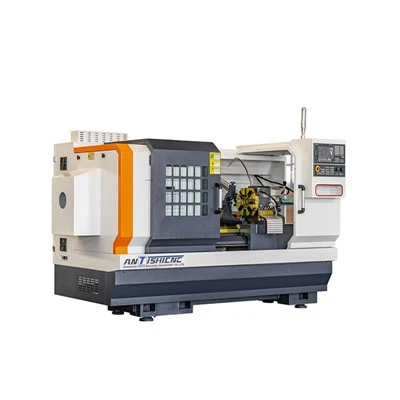
In the world of manufacturing, shaping tool machines play a pivotal role in creating precise and intricate components. As a trusted Shaping Tool Machine supplier, I understand the significance of evaluating the performance of these machines. This blog will delve into the key performance indicators that are crucial for assessing the efficiency and effectiveness of a shaping tool machine.
Accuracy and Precision
Accuracy and precision are two fundamental performance indicators for any shaping tool machine. Accuracy refers to the closeness of the machined part to the desired dimensions, while precision relates to the consistency of the machine's performance over multiple operations. In a high - quality shaping tool machine, both accuracy and precision are of utmost importance.
A shaping tool machine with high accuracy can produce parts that meet tight tolerances, which is essential in industries such as aerospace and automotive, where even the slightest dimensional deviation can lead to catastrophic failures. Precision, on the other hand, ensures that each part produced is identical to the previous one, which is crucial for mass production. To achieve high accuracy and precision, the machine's guiding systems, cutting tools, and control mechanisms must be well - calibrated and maintained. For example, ball screws and linear guides can provide smooth and accurate movement, reducing the chances of dimensional errors.
Cutting Speed and Feed Rate
The cutting speed and feed rate are critical factors that determine the productivity and quality of the shaping process. Cutting speed refers to the speed at which the cutting tool moves relative to the workpiece, while the feed rate is the rate at which the workpiece is advanced into the cutting tool.
Optimal cutting speed and feed rate settings can significantly reduce machining time and improve the surface finish of the machined part. However, these settings need to be carefully selected based on the material being machined, the type of cutting tool, and the machine's capabilities. For instance, when machining hard materials such as stainless steel, a lower cutting speed and a higher feed rate may be required to prevent excessive tool wear. On the other hand, when working with softer materials like aluminum, higher cutting speeds can be used to increase productivity.
Surface Finish
The surface finish of the machined part is another important performance indicator. A good surface finish not only enhances the aesthetic appeal of the part but also improves its functionality. For example, in components that are subject to sliding or friction, a smooth surface finish can reduce wear and improve the overall reliability of the system.
The surface finish of the shaped part is influenced by several factors, including the cutting tool geometry, cutting speed, feed rate, and the type of coolant used. Using a sharp cutting tool with appropriate geometry can help achieve a better surface finish. Additionally, the choice of coolant plays a crucial role in reducing friction and heat generation, which can also improve the surface quality.
Machine Rigidity
Machine rigidity is a measure of the machine's ability to resist deformation under the cutting forces. A rigid shaping tool machine is less likely to experience deflections during the machining process, which results in higher accuracy and better surface finish.
Rigidity is mainly determined by the machine's structure and the quality of its components. For example, a machine with a heavy - duty cast - iron frame is generally more rigid than one with a lighter frame. Additionally, the use of high - quality bearings and supports can enhance the machine's overall rigidity. A lack of rigidity can lead to problems such as chatter, which not only affects the surface finish but also reduces the tool life.
Tool Life
Tool life is an important economic performance indicator for a shaping tool machine. A longer tool life means less frequent tool replacements, which translates into lower production costs and higher productivity.
Several factors affect tool life, including the cutting conditions, the type of material being machined, the cutting tool material, and the tool's geometry. For example, carbide cutting tools are known for their high hardness and wear resistance, which can result in a longer tool life compared to high - speed steel tools. Proper tool maintenance, such as regular sharpening and regrinding, can also extend the tool life.
Power Consumption
In today's energy - conscious world, power consumption is an important performance indicator for shaping tool machines. A machine that consumes less power not only reduces the operating costs but also has a lower environmental impact.
Power consumption is influenced by several factors, including the cutting speed, feed rate, and the machine's overall efficiency. Manufacturers are constantly developing technologies to improve the energy efficiency of shaping tool machines. For example, some machines are equipped with variable - speed drives that adjust the power consumption based on the actual load, reducing energy waste during idle periods.
Ease of Operation and Maintenance
Ease of operation and maintenance are also important performance indicators. A shaping tool machine that is easy to operate allows operators to quickly learn and master the machine, reducing the training time and human - error rates.
On the other hand, easy maintenance ensures that the machine can be kept in good working condition with minimal downtime. Features such as accessible grease points, easy - to - replace filters, and user - friendly control panels contribute to the ease of operation and maintenance. Additionally, a machine with a modular design allows for quick and easy replacement of worn - out components.
Conclusion
In conclusion, evaluating the performance of a shaping tool machine requires a comprehensive understanding of multiple performance indicators, including accuracy, precision, cutting speed, surface finish, machine rigidity, tool life, power consumption, and ease of operation and maintenance. As a Shaping Tool Machine supplier, we are committed to providing high - quality machines that meet and exceed these performance standards.
If you are in the market for a shaping tool machine, or if you have any questions about our products, we encourage you to reach out to us. We can provide you with detailed information about our Shaping Slotting and Planing Machines, Small Shaper Machine, Shaping Planer, and Shaping and Planing Machine. Our team of experts is ready to assist you in finding the perfect machine for your specific needs. Contact us today to start the procurement discussion and take your manufacturing operations to the next level.


References
- "Machining Processes and Machine Tools" by Amitabha Ghosh and Ashok Kumar Mallik
- "Manufacturing Engineering and Technology" by Serope Kalpakjian and Steven R. Schmid