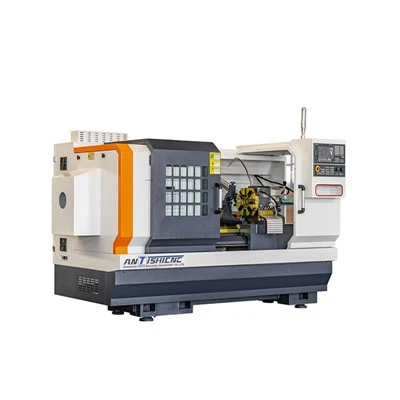
Hey there! As a supplier of Horizontal CNC Lathe, I've seen firsthand how crucial the servo system is in these machines. In this blog, I'll break down the role of the servo system in a CNC horizontal lathe, and why it's a game-changer in the world of machining.
Understanding the Basics of a CNC Horizontal Lathe
Before we dive into the servo system, let's quickly go over what a CNC horizontal lathe is. A CNC horizontal lathe is a type of computer numerical control (CNC) machine used for turning operations. It rotates a workpiece on its axis while a cutting tool is fed into it to remove material and create the desired shape. These lathes are widely used in various industries, from automotive to aerospace, for their precision and efficiency.
There are different types of CNC horizontal lathes, such as Flat Bed Lathe Machine, CNC Turn Mill Center Machine, and Flat Bed CNC Lathe Machine. No matter the type, the servo system plays a vital role in its operation.
What is a Servo System?
A servo system is a feedback control system that uses error-sensing negative feedback to correct the performance of a mechanism. In the context of a CNC horizontal lathe, the servo system consists of a servo motor, a servo amplifier, and a feedback device (usually an encoder).
The servo motor is responsible for providing the power to drive the various axes of the lathe, such as the X and Z axes. The servo amplifier controls the current and voltage supplied to the servo motor, based on the commands received from the CNC controller. The encoder provides feedback on the position and speed of the motor shaft, allowing the servo system to make real-time adjustments and ensure accurate positioning.
The Role of the Servo System in a CNC Horizontal Lathe
1. Precision Positioning
One of the primary roles of the servo system in a CNC horizontal lathe is to provide precise positioning of the cutting tool. The CNC controller sends commands to the servo amplifier, which then drives the servo motor to move the cutting tool to the desired position on the workpiece. The encoder continuously monitors the position of the motor shaft and sends feedback to the servo amplifier. If there is any deviation from the desired position, the servo amplifier adjusts the current and voltage supplied to the motor to correct the error.
This high level of precision is essential in machining applications, where even the smallest error can result in a defective part. For example, in the production of aerospace components, the tolerances are extremely tight, and the servo system ensures that the cutting tool is positioned accurately within micrometers.
2. Speed Control
In addition to precise positioning, the servo system also plays a crucial role in controlling the speed of the cutting tool. Different machining operations require different cutting speeds, depending on the material being machined, the type of cutting tool, and the desired surface finish. The CNC controller can adjust the speed of the servo motor based on the program instructions, and the servo system ensures that the motor maintains the desired speed accurately.
For instance, when machining a hard material like titanium, a slower cutting speed may be required to prevent tool wear and ensure a good surface finish. The servo system can quickly and accurately adjust the speed of the cutting tool to meet these requirements.
3. Torque Control
Torque is the rotational force produced by the servo motor. In a CNC horizontal lathe, the servo system needs to provide sufficient torque to drive the cutting tool through the workpiece. The torque requirements vary depending on the type of machining operation, the size of the workpiece, and the material being machined.
The servo amplifier can adjust the current supplied to the servo motor to control the torque output. During heavy cutting operations, the servo system can increase the torque to ensure that the cutting tool can remove the material effectively. On the other hand, during light finishing operations, the torque can be reduced to prevent overcutting and ensure a smooth surface finish.


4. Dynamic Response
The servo system in a CNC horizontal lathe needs to have a fast dynamic response to quickly adapt to changes in the machining process. For example, when the cutting tool encounters a hard spot in the workpiece, the servo system needs to adjust the feed rate and the cutting force to prevent tool breakage.
The high-speed feedback loop provided by the encoder allows the servo system to detect changes in the position and speed of the motor shaft in real-time. The servo amplifier can then make rapid adjustments to the current and voltage supplied to the motor to maintain the desired performance.
Benefits of a High-Quality Servo System in a CNC Horizontal Lathe
1. Improved Productivity
A high-quality servo system can significantly improve the productivity of a CNC horizontal lathe. The precise positioning, speed control, and torque control capabilities allow the lathe to perform machining operations more quickly and efficiently. With faster cycle times, more parts can be produced in a given period, increasing the overall output of the machine.
2. Better Quality Parts
The high level of precision and accuracy provided by the servo system results in better quality parts. The tight tolerances and smooth surface finishes achieved by the lathe ensure that the parts meet the required specifications. This reduces the need for secondary operations and improves the overall quality of the final product.
3. Enhanced Reliability
Servo systems are designed to be highly reliable, with advanced features such as overcurrent protection, overheat protection, and short-circuit protection. These features help to prevent damage to the servo motor and the amplifier, reducing the risk of machine breakdowns and downtime.
4. Flexibility
A high-quality servo system allows the CNC horizontal lathe to perform a wide range of machining operations. The ability to adjust the position, speed, and torque of the cutting tool makes the lathe suitable for machining different materials and geometries. This flexibility makes the lathe a valuable asset in any manufacturing facility.
Conclusion
In conclusion, the servo system plays a crucial role in the operation of a CNC horizontal lathe. It provides precise positioning, speed control, torque control, and dynamic response, which are essential for achieving high-quality machining results. A high-quality servo system can improve productivity, enhance the quality of parts, increase reliability, and provide flexibility in machining operations.
If you're in the market for a CNC horizontal lathe or looking to upgrade your existing equipment, we're here to help. Our team of experts can provide you with the latest information and advice on the best servo systems and CNC horizontal lathes for your specific needs. Contact us today to start a conversation about your procurement requirements.
References
- "Modern Manufacturing Technology" by Joseph A. Schey
- "CNC Programming Handbook" by Peter Smid