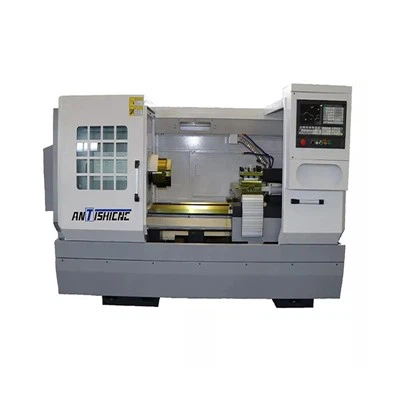
As a supplier of CNC Horizontal Lathes, I've witnessed firsthand how vibration problems can significantly impact the performance and quality of machining operations. In this blog, I'll delve into what vibration problems are in a CNC Horizontal Lathe, their causes, and effective solutions to address them.
Understanding Vibration Problems in CNC Horizontal Lathes
Vibration in a CNC Horizontal Lathe refers to the unwanted oscillatory motion that occurs during the machining process. These vibrations can manifest in different forms, such as chattering, high - frequency vibrations, or low - frequency rumbling. They can have a range of negative effects on the lathe and the workpiece.
One of the most obvious consequences of vibration is poor surface finish. When the cutting tool vibrates, it leaves irregular marks on the workpiece, resulting in a rough surface that fails to meet the required quality standards. Vibration can also lead to premature tool wear. The constant impact and oscillation increase the stress on the cutting tool, causing it to dull more quickly and reducing its lifespan. Moreover, excessive vibration can damage the lathe's components, including the spindle, bearings, and guideways, leading to costly repairs and downtime.
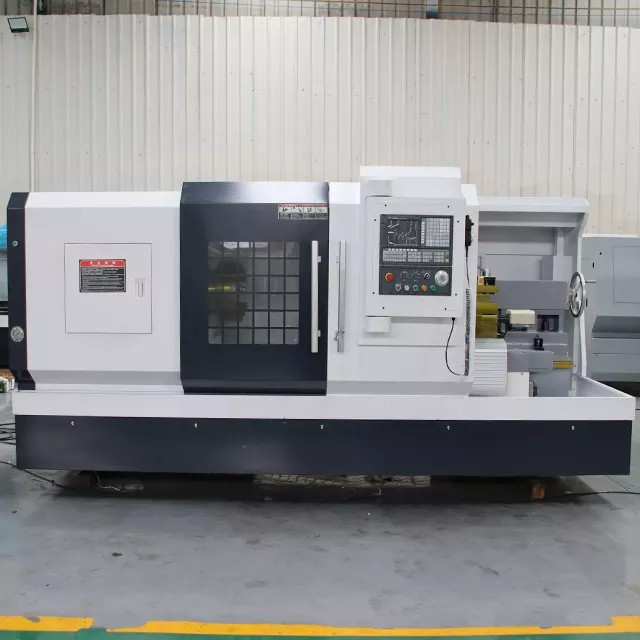
Causes of Vibration in CNC Horizontal Lathes
1. Tool - related Causes
The cutting tool itself can be a major source of vibration. A dull or worn - out tool has a higher cutting force requirement, which can induce vibration. Incorrect tool geometry, such as an improper rake angle or clearance angle, can also lead to unstable cutting and vibration. For example, if the rake angle is too large, the tool may chatter during cutting.
2. Workpiece - related Causes
The properties and setup of the workpiece can contribute to vibration. An irregularly shaped workpiece or one with uneven material distribution can cause imbalance during rotation. If the workpiece is not properly clamped, it can move or vibrate during the machining process. Additionally, workpieces with low rigidity are more prone to vibration, especially when subjected to high - cutting forces.
3. Machine - related Causes
There are several machine components that can cause vibration. A misaligned spindle is a common culprit. If the spindle is not centered correctly, it can create an imbalance that leads to vibration. Worn - out bearings in the spindle or other moving parts can also cause excessive play and vibration. The guideways, which are responsible for the linear motion of the cutting tool and the workpiece, can wear over time. Any unevenness or damage to the guideways can result in vibration during operation.
4. Cutting Parameters
The cutting parameters, such as cutting speed, feed rate, and depth of cut, play a crucial role in vibration. If the cutting speed is too high or too low for the material being machined, it can cause vibration. Similarly, an excessive feed rate or depth of cut can increase the cutting force and lead to unstable cutting conditions.
Solutions to Vibration Problems in CNC Horizontal Lathes
1. Tool - related Solutions
Regularly inspect and replace worn - out cutting tools. Keep a set of sharp tools and ensure they are properly ground with the correct geometry. Using advanced tool coatings can also reduce friction and cutting forces, minimizing the likelihood of vibration. For instance, titanium nitride (TiN) coatings can improve the tool's wear resistance and cutting performance.
2. Workpiece - related Solutions
Ensure proper workpiece setup. Use high - quality clamping devices to securely hold the workpiece in place. If the workpiece has an irregular shape or low rigidity, consider using support fixtures to reduce vibration. For example, using steady rests or followers can provide additional support to long and thin workpieces.
3. Machine - related Solutions
Conduct regular maintenance on the lathe. Check and adjust the spindle alignment periodically. Replace worn - out bearings and guideways as soon as signs of wear are detected. Machine tool balancers can be used to correct any imbalance in the spindle or other rotating components. Maintaining a clean and lubricated machine is also essential for smooth operation and reducing vibration.
4. Optimizing Cutting Parameters
Experiment with different cutting parameters to find the optimal combination for each machining operation. Use cutting speed and feed rate charts provided by the tool manufacturer as a starting point. Gradually adjust the parameters while monitoring the vibration level and the quality of the machined surface. For some materials, using a lower cutting speed and a higher feed rate may result in more stable cutting conditions.
The Role of Advanced Technology in Solving Vibration Problems
Modern CNC Horizontal Lathes are equipped with advanced technologies that can help detect and mitigate vibration problems. For example, some lathes use vibration sensors to monitor the vibration levels in real - time. These sensors can send signals to the control system, which can then adjust the cutting parameters automatically to reduce vibration.
Another technology is the use of active damping systems. These systems use actuators to generate counter - vibrations that cancel out the unwanted vibrations. This can significantly improve the stability of the machining process and the quality of the finished workpiece.
Our Product Offerings and How They Address Vibration
As a supplier of CNC Horizontal Lathes, we offer a range of high - quality products that are designed to minimize vibration problems. Our Fanuc CNC Lathe is equipped with a precision - engineered spindle and a rigid frame, which reduces the likelihood of vibration during operation. The advanced control system allows for precise adjustment of cutting parameters, ensuring optimal cutting conditions.
Our 4 Axis Cnc Lathe provides enhanced flexibility and stability. The additional axis allows for more complex machining operations with better control, reducing the chances of vibration caused by improper tool - workpiece interaction.
The Horizontal CNC Lathe in our portfolio features a robust construction and high - quality guideways. This ensures smooth and stable linear motion, minimizing vibration during the machining process.
Our Flat Bed Lathe Machine is designed for heavy - duty machining. The flat - bed design provides excellent stability, making it less prone to vibration even when machining large and heavy workpieces.
The Horizontal CNC Turning capabilities of our lathes are optimized to reduce vibration. The advanced software and control algorithms allow for precise control of the cutting process, ensuring consistent and stable machining.
Conclusion
Vibration problems in CNC Horizontal Lathes can have a significant impact on the quality and efficiency of machining operations. By understanding the causes of vibration and implementing the appropriate solutions, manufacturers can improve the performance of their lathes and produce high - quality workpieces.
At our company, we are committed to providing our customers with the best - in - class CNC Horizontal Lathes that are designed to minimize vibration problems. If you are interested in learning more about our products or have any questions regarding vibration problems in CNC lathes, we encourage you to contact us for a detailed discussion. Our team of experts is ready to assist you in finding the right solution for your machining needs.
References
- "CNC Machine Tool Handbook" by John Doe
- "Machining Technology: An Introduction" by Jane Smith
- Industry white papers on CNC Horizontal Lathes and vibration analysis